



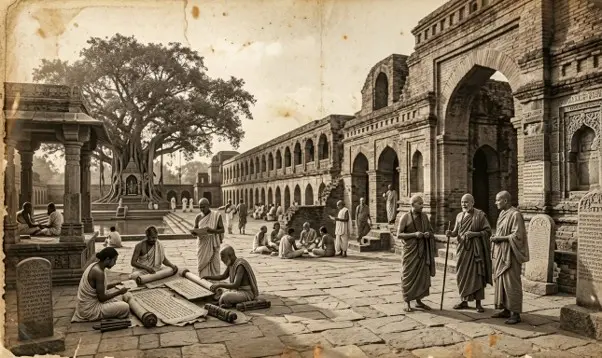
प्राचीन भारत के महान विश्वविद्यालयों की अनकही कहानियाँ
प्राचीन भारत के महान विश्वविद्यालयों की अनकही कहानियाँ
भारत में विश्वविद्यालय तब थे, जब बाकी दुनिया के ज़्यादातर देशों में शहर भी नहीं बने थे।
हज़ारों छात्र। सैकड़ों शिक्षक। इतनी बड़ी लाइब्रेरी जिसको जलाने में महीनों लग गए। यह कोई कल्पना नहीं है। यह सच था। और यह सब यहीं भारत में हुआ था।
ज़्यादातर लोग यह कहानी नहीं जानते। आज हम यही बदलेंगे।
नालंदा: सीखने के लिए बसाया गया एक पूरा शहर
क्या आपने नालंदा का नाम सुना है? शायद सुना होगा। लेकिन क्या आप जानते हैं कि यह असल में क्या था?
नालंदा सिर्फ एक स्कूल नहीं था। यह पढ़ाई के लिए बसाया गया एक पूरा शहर था। यह 5वीं सदी ईस्वी के आसपास बिहार में शुरू हुआ। अपने सबसे अच्छे दौर में यहाँ करीब 10,000 छात्र रहते थे। हर रोज़ लगभग 2,000 शिक्षक पढ़ाते थे।
यहाँ क्या पढ़ाया जाता था?
चिकित्सा। गणित। खगोल विज्ञान। दर्शनशास्त्र। तर्कशास्त्र। भाषाएँ। और भी बहुत कुछ।
छात्र चीन, जापान, कोरिया, तिब्बत, इंडोनेशिया, फारस और तुर्की से आते थे। यह सच में एक अंतरराष्ट्रीय विश्वविद्यालय था। और सबसे खास बात: कोई फीस नहीं थी। खाना, कपड़ा और रहने की जगह: सब कुछ मुफ्त था।
नालंदा की लाइब्रेरी का नाम था धर्मगंज। इसमें तीन बड़ी इमारतें थीं। इसमें करीब नौ करोड़ किताबें और पांडुलिपियाँ थीं। जब 12वीं सदी में हमलावरों ने इसे जलाया, तो यह पूरे तीन महीनों तक जलती रही।
तीन महीने।
बस इसी से अंदाज़ा लगाइए कि वहाँ कितना ज्ञान था।
तक्षशिला: दुनिया का सबसे पुराना विश्वविद्यालय
तक्षशिला उससे कहीं ज़्यादा पुराना है जितना आप सोचते हैं।
यह 7वीं सदी ईसा पूर्व में चल रहा था। यानी आज से करीब 2,700 साल पहले। ऑक्सफोर्ड विश्वविद्यालय 1096 ईस्वी में बना। हार्वर्ड 1636 ईस्वी में। तब तक तक्षशिला पहले से ही बहुत पुराना हो चुका था।
यह आज के पाकिस्तान के उत्तर-पश्चिम में था। लेकिन उस समय यह भारतीय उपमहाद्वीप का केंद्र था। सोलह साल के छात्र सैकड़ों मील पैदल चलकर यहाँ पढ़ने आते थे।
कोई क्लासरूम नहीं था। कोई डेस्क और ब्लैकबोर्ड नहीं था। शिक्षक अपने घरों में रहते थे। छात्र सीधे उनके पास जाते थे। बातचीत, सुनने और बहस करने से सीखा जाता था।
विषय बहुत व्यापक और व्यावहारिक थे। वेद। धनुर्विद्या। चिकित्सा। खेती। व्यापार। राजनीति। यहाँ तक कि हाथी को प्रशिक्षित करना भी।
भारत के कुछ महान विद्वान यहाँ पढ़े। चाणक्य: जिन्होंने अर्थशास्त्र लिखा और मौर्य साम्राज्य की नींव रखी। चरक: आयुर्वेदिक चिकित्सा के जनक। पाणिनि: जिन्होंने दुनिया की पहली व्यवस्थित व्याकरण प्रणाली बनाई।
कोई डिग्री नहीं दी जाती थी। कोई प्रमाण पत्र नहीं मिलता था। आपका ज्ञान ही आपका प्रमाण था। आपके शिक्षक का शब्द ही आपकी योग्यता था।
विक्रमशिला: वह नाम जिसे कोई नहीं जानता
ज़्यादातर लोग नालंदा को जानते हैं। विक्रमशिला को लगभग कोई नहीं जानता।
राजा धर्मपाल ने इसे 8वीं सदी ईस्वी में बनवाया था। यह भी बिहार में था। यहाँ 100 से ज़्यादा शिक्षक और 1,000 से अधिक छात्र थे।
विक्रमशिला एक चीज़ के लिए मशहूर था, गुणवत्ता।
किसी भी विद्वान को अंदर आने से पहले एक द्वारपाल का सामना करना पड़ता था। एक ज्ञानी व्यक्ति जो कठिन सवाल पूछता था। अगर जवाब नहीं दे पाए, तो अंदर नहीं आ सकते थे। सिर्फ सबसे काबिल लोगों को ही अंदर आने दिया जाता था।
महान विद्वान अतीश दीपंकर यहाँ पढ़े और पढ़ाए। बाद में वे तिब्बत गए और वहाँ बौद्ध धर्म के तरीके को बदल दिया। आज हम विक्रमशिला के बारे में जो कुछ जानते हैं वह ज़्यादातर तिब्बती लेखों से आता है, क्योंकि भारतीय लेख उन्हीं हमलों में नष्ट हो गए जिन्होंने नालंदा को जलाया था।
विक्रमशिला को याद किया जाना चाहिए। यह शानदार था। और बहुत जल्दी भुला दिया गया।
वल्लभी: जहाँ नेताओं को तैयार किया जाता था
नालंदा ने साधु और दार्शनिक तैयार किए। तक्षशिला ने डॉक्टर और योद्धा। वल्लभी ने नेता तैयार किए।
यह आज के गुजरात में था। यह 6वीं से 8वीं सदी ईस्वी के बीच चला। राजा यहाँ अपने बेटों को भेजते थे। भविष्य के मंत्री यहाँ पढ़ते थे। यहाँ कानून, शासन और प्रशासन पर ध्यान दिया जाता था।
इसे एक प्राचीन स्कूल समझिए जो भविष्य के शासकों और अधिकारियों को तैयार करता था।
मशहूर चीनी यात्री ह्वेनसांग ने वल्लभी का दौरा किया। उन्होंने लिखा कि यहाँ के स्नातक भारत के विभिन्न राज्यों में बड़े अधिकारी बने। इसकी एक पहचान थी। इसका सम्मान था। और बाकियों की तरह यह भी आखिरकार इतिहास में खो गया।
ये विश्वविद्यालय हमें क्या बताते हैं
ये जगहें इतिहास की कोई संयोग नहीं थीं।
ये इसलिए थीं क्योंकि भारतीय समाज ज्ञान को गहराई से महत्व देता था। राजाओं ने ज़मीन दी। व्यापारियों ने पैसा दिया। आम लोगों ने विद्वानों का सम्मान किया। पूरी व्यवस्था इसलिए काम करती थी क्योंकि सभी मानते थे कि सीखना ज़रूरी है।
जो विषय पढ़ाए जाते थे वे अपने समय से बहुत आगे थे। तक्षशिला में शल्य चिकित्सा सिखाई जाती थी जब दुनिया के बाकी हिस्सों को साफ-सफाई की भी जानकारी नहीं थी। नालंदा में खगोल विज्ञान पढ़ाया जाता था जब दूसरी सभ्यताएँ अभी भी सोचती थीं कि धरती चपटी है।
ये विश्वविद्यालय सबके लिए खुले थे। चीन का छात्र केरल के छात्र के बगल में बैठता था। फारस का छात्र नेपाल के छात्र के साथ पढ़ता था। कोई दीवार नहीं। कोई सीमा नहीं। बस ज्ञान।
एक कहानी जो सुनाई जानी चाहिए
इन विश्वविद्यालयों पर हमले हुए। इनकी इमारतें गिरा दी गईं। इनकी किताबें जला दी गईं। इनकी बहुत सी कहानियाँ हमेशा के लिए खो गईं।
जब लोग आज भारत को शिक्षा का एक बड़ा केंद्र बनाने की बात करते हैं, तो वे कुछ नया शुरू नहीं कर रहे। वे कुछ पुराना उठा रहे हैं। कुछ ऐसा जिसे पूरी दुनिया कभी भारत में आकर ढूँढती थी।
भारत ने सिर्फ दुनिया से नहीं सीखा। सदियों तक दुनिया यहाँ सीखने आती थी।
यही कहानी है। सरल। सच। और याद रखने योग्य।
The Untold Stories of Ancient Indian Universities
India had universities before most countries had cities.
Thousands of students. Hundreds of teachers. Libraries so big they took months to burn down. This was not a dream. This was real. And it happened right here in India.
Most people do not know this story. Today, let us change that.
Nalanda: A City Built for Learning
Have you heard of Nalanda? Most people have. But do you know what it really was?
Nalanda was not just a school. It was an entire city made for studying. It started around the 5th century AD in Bihar. At its best, nearly 10,000 students lived there. About 2,000 teachers worked there every day.
What did they study? Medicine. Maths. Astronomy. Philosophy. Logic. Languages. Almost everything you can think of.
Students came from China, Japan, Korea, Tibet, Indonesia, Persia, and Turkey. It was truly a global university. And here is the best part, nobody paid fees. Food, clothes, and a place to sleep were all free.
The library at Nalanda was called Dharmaganja. It had three big buildings. It held around nine million books and manuscripts. When attackers burned it down in the 12th century, it kept burning for three full months.
Three months.
That tells you everything about how much knowledge was stored there.
Takshashila: The Oldest University in the World
Takshashila is older than you think. Much older.
It was running as far back as the 7th century BC. That is nearly 2,700 years ago. Oxford University was founded in 1096 AD. Harvard in 1636 AD. Takshashila was already ancient by then.
It sat in what is now northwestern Pakistan. But back then, it was the heart of the Indian subcontinent. Students as young as sixteen walked hundreds of miles just to study there.
There were no classrooms with desks and blackboards. Teachers lived in their homes. Students came to them directly. You learned by talking, listening, and debating.
The subjects were wide and practical. Vedas. Archery. Medicine. Agriculture. Trade. Politics. Even elephant training.
Some of India's greatest minds studied here. Chanakya: the man who wrote the Arthashastra and shaped the Maurya Empire. Charaka: the father of Ayurvedic medicine. Panini: the man who created the world's first organised grammar system.
No degree was given. No certificate was handed out. Your knowledge was your proof. Your teacher's word was your qualification.
Vikramashila: The Name Nobody Talks About
Most people know Nalanda. Almost nobody knows Vikramashila.
King Dharmapala built it in the 8th century AD. It was also in Bihar. It had over 100 teachers and more than 1,000 students.
Vikramashila was famous for one thing above all, quality control.
Before any scholar could enter, they had to face a gatekeeper. A learned person who would ask them hard questions. If you could not answer, you could not enter. Only the best were allowed inside.
The great scholar Atisha Dipankara studied and taught here. He later went to Tibet and changed the way Buddhism was practised there. Much of what we know about Vikramashila today comes from Tibetan records, because Indian records were destroyed in the same attacks that burnt down Nalanda.
Vikramashila deserves to be remembered. It was brilliant. And it was forgotten too soon.
Vallabhi: Where Leaders Were Trained
Nalanda trained monks and philosophers. Takshashila trained doctors and warriors. Vallabhi trained leaders.
It was in present-day Gujarat. It ran between the 6th and 8th centuries AD. Kings sent their sons here. Future ministers studied here. It focused on law, governance, and public administration.
Think of it as an ancient school for future rulers and officers.
The famous Chinese traveller Xuanzang visited Vallabhi. He wrote that its graduates went on to become high officials in kingdoms across India. It had a reputation. It had respect. And like the others, it was eventually lost to history.
What These Universities Tell Us
These places were not accidents of history.
They existed because Indian society valued knowledge deeply. Kings gave land. Merchants gave money. Common people respected scholars. The whole system worked because everyone believed that learning mattered.
The subjects taught were far ahead of their time. Surgery was being taught at Takshashila when most of the world had no idea about basic hygiene. Astronomy was being studied at Nalanda when other civilisations still thought the earth was flat.
These universities were also open to everyone. A student from China sat next to a student from Kerala. A student from Persia learned beside a student from Nepal. No walls. No borders. Just knowledge.
A Story Worth Telling
These universities were attacked. Their buildings were torn down. Their books were burned. Many of their stories were lost forever.
But they existed. And that matters.
When people talk about making India a great centre of education today, they are not starting something new. They are picking up something old. Something the whole world once came to India to find.
India did not just learn from the world. For centuries, the world came here to learn.
That is the story. Simple. True. And worth remembering.


Be the first to comment on this post.