



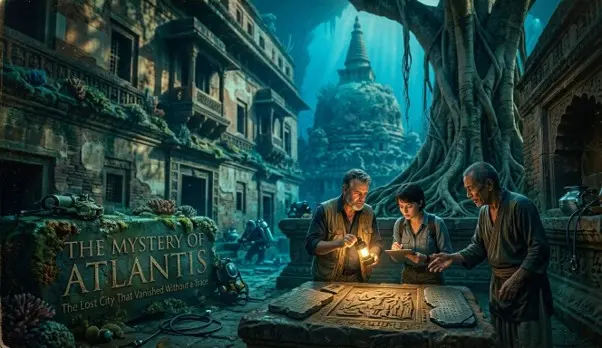
वह खोया हुआ शहर जो बिना निशान छोड़े गायब हो गया: अटलांटिस का रहस्य
प्राचीन भारत के महान विश्वविद्यालयों की अनकही कहानियाँ
भारत में विश्वविद्यालय तब थे, जब बाकी दुनिया के ज़्यादातर देशों में शहर भी नहीं बने थे।
हज़ारों छात्र। सैकड़ों शिक्षक। इतनी बड़ी लाइब्रेरी जिसको जलाने में महीनों लग गए। यह कोई कल्पना नहीं है। यह सच था। और यह सब यहीं भारत में हुआ था।
ज़्यादातर लोग यह कहानी नहीं जानते। आज हम यही बदलेंगे।
नालंदा: सीखने के लिए बसाया गया एक पूरा शहर
क्या आपने नालंदा का नाम सुना है? शायद सुना होगा। लेकिन क्या आप जानते हैं कि यह असल में क्या था?
नालंदा सिर्फ एक स्कूल नहीं था। यह पढ़ाई के लिए बसाया गया एक पूरा शहर था। यह 5वीं सदी ईस्वी के आसपास बिहार में शुरू हुआ। अपने सबसे अच्छे दौर में यहाँ करीब 10,000 छात्र रहते थे। हर रोज़ लगभग 2,000 शिक्षक पढ़ाते थे।
यहाँ क्या पढ़ाया जाता था?
चिकित्सा। गणित। खगोल विज्ञान। दर्शनशास्त्र। तर्कशास्त्र। भाषाएँ। और भी बहुत कुछ।
छात्र चीन, जापान, कोरिया, तिब्बत, इंडोनेशिया, फारस और तुर्की से आते थे। यह सच में एक अंतरराष्ट्रीय विश्वविद्यालय था। और सबसे खास बात: कोई फीस नहीं थी। खाना, कपड़ा और रहने की जगह: सब कुछ मुफ्त था।
नालंदा की लाइब्रेरी का नाम था धर्मगंज। इसमें तीन बड़ी इमारतें थीं। इसमें करीब नौ करोड़ किताबें और पांडुलिपियाँ थीं। जब 12वीं सदी में हमलावरों ने इसे जलाया, तो यह पूरे तीन महीनों तक जलती रही।
तीन महीने।
बस इसी से अंदाज़ा लगाइए कि वहाँ कितना ज्ञान था।
तक्षशिला: दुनिया का सबसे पुराना विश्वविद्यालय
तक्षशिला उससे कहीं ज़्यादा पुराना है जितना आप सोचते हैं।
यह 7वीं सदी ईसा पूर्व में चल रहा था। यानी आज से करीब 2,700 साल पहले। ऑक्सफोर्ड विश्वविद्यालय 1096 ईस्वी में बना। हार्वर्ड 1636 ईस्वी में। तब तक तक्षशिला पहले से ही बहुत पुराना हो चुका था।
यह आज के पाकिस्तान के उत्तर-पश्चिम में था। लेकिन उस समय यह भारतीय उपमहाद्वीप का केंद्र था। सोलह साल के छात्र सैकड़ों मील पैदल चलकर यहाँ पढ़ने आते थे।
कोई क्लासरूम नहीं था। कोई डेस्क और ब्लैकबोर्ड नहीं था। शिक्षक अपने घरों में रहते थे। छात्र सीधे उनके पास जाते थे। बातचीत, सुनने और बहस करने से सीखा जाता था।
विषय बहुत व्यापक और व्यावहारिक थे। वेद। धनुर्विद्या। चिकित्सा। खेती। व्यापार। राजनीति। यहाँ तक कि हाथी को प्रशिक्षित करना भी।
भारत के कुछ महान विद्वान यहाँ पढ़े। चाणक्य: जिन्होंने अर्थशास्त्र लिखा और मौर्य साम्राज्य की नींव रखी। चरक: आयुर्वेदिक चिकित्सा के जनक। पाणिनि: जिन्होंने दुनिया की पहली व्यवस्थित व्याकरण प्रणाली बनाई।
कोई डिग्री नहीं दी जाती थी। कोई प्रमाण पत्र नहीं मिलता था। आपका ज्ञान ही आपका प्रमाण था। आपके शिक्षक का शब्द ही आपकी योग्यता था।
विक्रमशिला: वह नाम जिसे कोई नहीं जानता
ज़्यादातर लोग नालंदा को जानते हैं। विक्रमशिला को लगभग कोई नहीं जानता।
राजा धर्मपाल ने इसे 8वीं सदी ईस्वी में बनवाया था। यह भी बिहार में था। यहाँ 100 से ज़्यादा शिक्षक और 1,000 से अधिक छात्र थे।
विक्रमशिला एक चीज़ के लिए मशहूर था, गुणवत्ता।
किसी भी विद्वान को अंदर आने से पहले एक द्वारपाल का सामना करना पड़ता था। एक ज्ञानी व्यक्ति जो कठिन सवाल पूछता था। अगर जवाब नहीं दे पाए, तो अंदर नहीं आ सकते थे। सिर्फ सबसे काबिल लोगों को ही अंदर आने दिया जाता था।
महान विद्वान अतीश दीपंकर यहाँ पढ़े और पढ़ाए। बाद में वे तिब्बत गए और वहाँ बौद्ध धर्म के तरीके को बदल दिया। आज हम विक्रमशिला के बारे में जो कुछ जानते हैं वह ज़्यादातर तिब्बती लेखों से आता है, क्योंकि भारतीय लेख उन्हीं हमलों में नष्ट हो गए जिन्होंने नालंदा को जलाया था।
विक्रमशिला को याद किया जाना चाहिए। यह शानदार था। और बहुत जल्दी भुला दिया गया।
वल्लभी: जहाँ नेताओं को तैयार किया जाता था
नालंदा ने साधु और दार्शनिक तैयार किए। तक्षशिला ने डॉक्टर और योद्धा। वल्लभी ने नेता तैयार किए।
यह आज के गुजरात में था। यह 6वीं से 8वीं सदी ईस्वी के बीच चला। राजा यहाँ अपने बेटों को भेजते थे। भविष्य के मंत्री यहाँ पढ़ते थे। यहाँ कानून, शासन और प्रशासन पर ध्यान दिया जाता था।
इसे एक प्राचीन स्कूल समझिए जो भविष्य के शासकों और अधिकारियों को तैयार करता था।
मशहूर चीनी यात्री ह्वेनसांग ने वल्लभी का दौरा किया। उन्होंने लिखा कि यहाँ के स्नातक भारत के विभिन्न राज्यों में बड़े अधिकारी बने। इसकी एक पहचान थी। इसका सम्मान था। और बाकियों की तरह यह भी आखिरकार इतिहास में खो गया।
ये विश्वविद्यालय हमें क्या बताते हैं
ये जगहें इतिहास की कोई संयोग नहीं थीं।
ये इसलिए थीं क्योंकि भारतीय समाज ज्ञान को गहराई से महत्व देता था। राजाओं ने ज़मीन दी। व्यापारियों ने पैसा दिया। आम लोगों ने विद्वानों का सम्मान किया। पूरी व्यवस्था इसलिए काम करती थी क्योंकि सभी मानते थे कि सीखना ज़रूरी है।
जो विषय पढ़ाए जाते थे वे अपने समय से बहुत आगे थे। तक्षशिला में शल्य चिकित्सा सिखाई जाती थी जब दुनिया के बाकी हिस्सों को साफ-सफाई की भी जानकारी नहीं थी। नालंदा में खगोल विज्ञान पढ़ाया जाता था जब दूसरी सभ्यताएँ अभी भी सोचती थीं कि धरती चपटी है।
ये विश्वविद्यालय सबके लिए खुले थे। चीन का छात्र केरल के छात्र के बगल में बैठता था। फारस का छात्र नेपाल के छात्र के साथ पढ़ता था। कोई दीवार नहीं। कोई सीमा नहीं। बस ज्ञान।
एक कहानी जो सुनाई जानी चाहिए
इन विश्वविद्यालयों पर हमले हुए। इनकी इमारतें गिरा दी गईं। इनकी किताबें जला दी गईं। इनकी बहुत सी कहानियाँ हमेशा के लिए खो गईं।
जब लोग आज भारत को शिक्षा का एक बड़ा केंद्र बनाने की बात करते हैं, तो वे कुछ नया शुरू नहीं कर रहे। वे कुछ पुराना उठा रहे हैं। कुछ ऐसा जिसे पूरी दुनिया कभी भारत में आकर ढूँढती थी।
भारत ने सिर्फ दुनिया से नहीं सीखा। सदियों तक दुनिया यहाँ सीखने आती थी।
यही कहानी है। सरल। सच। और याद रखने योग्य।
The Lost City That Vanished Without a Trace: The Mystery of Atlantis
Some stories never die.
No matter how many years pass. No matter how much the world changes. Some stories keep coming back. They pull you in. They make you wonder.
Atlantis is one of those stories.
A city that sank into the ocean. A civilization that disappeared overnight. A mystery that nobody has solved in over two thousand years.
Was it real? Was it just a story? Let us find out.
What Was Atlantis?
The name Atlantis first appeared in the writings of a Greek philosopher named Plato.
Around 360 BC, Plato wrote two books: Timaeus and Critias. In these books, he described a place called Atlantis in great detail.
He wrote that Atlantis was a powerful and wealthy island. It sat in the Atlantic Ocean. The people there were smart, strong, and well organised. They had a large army. They had conquered big parts of Europe and Africa.
But then one day: it was all gone.
According to Plato, a massive earthquake and floods struck without warning. And Atlantis sank into the ocean. In just one single night.
No trace. No ruins. Nothing.
What Did Atlantis Look Like?
Plato described Atlantis in a way that feels almost too detailed to be fiction.
It was a large island. Bigger than Libya and Asia put together, he wrote. At its centre was a hill. Around that hill were rings of water and land, going round and round like circles. Golden walls. Silver temples. Beautiful gardens. Wide roads. A grand royal palace.
The people of Atlantis were, at first, good people. Honest. Hard working. Fair to each other.
But slowly things changed. Greed crept in. Pride took over. They started attacking other nations. They wanted more land. More power. More gold.
And that is when, Plato wrote, the gods decided to punish them.
One night. One storm. One earthquake.
And Atlantis was gone forever.
Was Atlantis Real?
This is the biggest question of all.
Scientists, historians, and explorers have spent centuries trying to answer it. No clear answer has come yet.
There are three kinds of people when it comes to Atlantis.
The first group says Atlantis was completely real. It was an actual city that sank into the sea. They believe Plato was recording true history.
The second group says it was purely Plato's imagination. He made it up to teach a moral lesson. Nothing more. Nothing less.
The third group sits in the middle. They say there may be a grain of truth in the story. Perhaps a real event happened somewhere. And Plato heard about it, added details, and turned it into a bigger tale.
All three groups have their reasons. And none of them can fully prove the other wrong.
Where Have People Searched for Atlantis?
Over the last two thousand years, people have looked for Atlantis in almost every corner of the world.
In the Atlantic Ocean: Plato himself pointed here. Many explorers have gone deep into the Atlantic looking for sunken ruins. Nothing matching Atlantis has been found.
In the Mediterranean Sea: Some researchers believe Atlantis was close to Greece. There is an island called Santorini where a massive volcanic eruption happened around 1600 BC. The explosion was so powerful that the centre of the island collapsed into the sea. An entire advanced civilisation living there, called the Minoans was wiped out.
Could this be what Plato was describing?
Near Spain: In 2004, a group of scientists found circular structures buried in marshland near the southern coast of Spain. They looked very similar to the ring-shaped layout Plato described. Were these the remains of Atlantis?
Under Antarctica: Some people believe Atlantis is buried under thick ice at the South Pole. It sounds far-fetched. But even today, a small group of researchers holds on to this theory.
In India: This one is close to home. The ancient city of Dwarka said to be the kingdom of Lord Krishna is believed to have submerged into the sea thousands of years ago. Underwater excavations off the coast of Gujarat have actually found ancient structures beneath the water. Many people around the world draw a parallel between Dwarka and Atlantis. Two great cities. Two mysterious disappearances. Both swallowed by the sea.
Santorini: The Strongest Clue
If Atlantis existed anywhere, most serious researchers point to Santorini as the best candidate.
The Minoan civilization that lived there was highly advanced. They had large palaces. Beautiful wall paintings. A strong sea trade network. They were the most developed people in that part of the world at that time.
Then around 1600 BC, one of the biggest volcanic eruptions in human history struck. The centre of the island sank. Massive waves: called tsunamis, hit nearby coasts. The Minoan civilization collapsed almost completely.
Suddenly. Without much warning.
Does this sound familiar?
Many historians believe that stories of this disaster travelled across the ancient world. And that Plato, hearing these stories centuries later, built the tale of Atlantis around them.
It is not a perfect match. But it is the closest thing we have.
Did Plato Make It All Up?
Some of the most respected historians in the world believe Atlantis was never real.
They say Plato was a philosopher, not a historian. His job was not to record facts. His job was to make people think. To teach lessons about life, power, and morality.
And what better way to do that than through a gripping story?
The people of Atlantis were good: and they prospered. They became greedy, and they were destroyed. The message is simple and timeless. Pride leads to a fall. Power without wisdom leads to ruin.
If this is true, then Plato was a genius storyteller. He created a fictional city so convincingly real that people are still searching for it two thousand years later.
That alone is remarkable.
The Search Goes On
Even today, the search for Atlantis has not stopped.
Underwater drones scan the ocean floor. Satellites take images of the seabed. Old texts are re-read with fresh eyes. New technology opens new possibilities.
Every few years, someone announces they may have found it. And every few years, the evidence turns out to be not quite enough.
But people keep looking.
And perhaps that says something important, not about Atlantis, but about us.
The Final Word
Whether Atlantis was real or not, one thing is certain.
This story has lasted over two thousand years. It has survived wars, empires rising and falling, and entire civilisations disappearing. And it is still here. Still being talked about. Still being searched for.
That kind of staying power belongs only to the greatest stories ever told.
Maybe Atlantis is out there. Sitting quietly at the bottom of some ocean. Waiting to be found.
Or maybe it lives exactly where it was always meant to live — in the human imagination. In our endless curiosity. In our deep desire to believe that somewhere out there, something extraordinary once existed.
Either way, the mystery of Atlantis is far from over.
The search continues.
- Atlantis
- mystery
- Lost
- City
- of
- explained
- documentary
- history
- real
- or
- myth
- Was
- Plato
- story
- civilization
- Ancient
- mysteries
- Greatest
- unsolved
- Mysterious
- places
- on
- Earth
- Sunken
- Underwater
- Greek
- mythology
- Timaeus
- Critias
- Santorini
- Minoan
- eruption
- Volcanic
- Dwarka
- and
- archaeology
- Ocean
- civilizations
- Hidden
- Historical
- empire
- found
- evidence
- vs
- reality
- Unexplained
- Secrets
- facts
- Educational
- exploration
- world
- Forgotten
- the
- search


Be the first to comment on this post.