



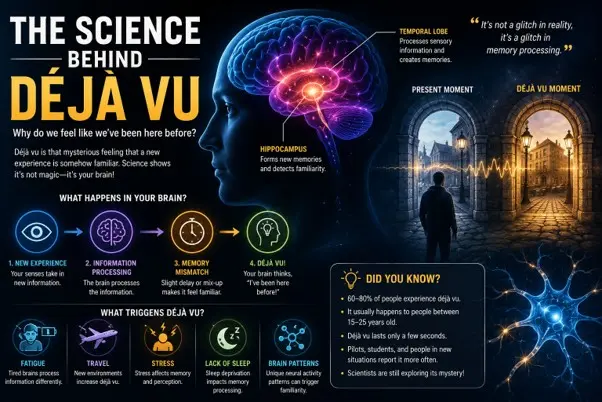
डेजा वू के पीछे का विज्ञान: हमें ऐसा क्यों लगता है कि हम यह पल पहले भी जी चुके हैं?
क्या आपके साथ कभी ऐसा हुआ है कि आप किसी नई जगह पर पहुंचे हों और अचानक ऐसा महसूस हो कि आप यहां पहले भी आ चुके हैं?
शायद वह कोई अनजान सड़क हो, किसी अजनबी का घर हो, या किसी व्यक्ति द्वारा कही गई कोई बात। कुछ सेकंड के लिए सब कुछ इतना परिचित लगता है कि आपको विश्वास ही नहीं होता कि यह पहली बार हो रहा है। इस रहस्यमयी एहसास को डेजा वू (Déjà Vu) कहा जाता है। सदियों से यह अनुभव वैज्ञानिकों और आम लोगों दोनों के लिए एक पहेली बना हुआ है। लेकिन इसके पीछे का विज्ञान किसी भी रहस्यमयी कहानी से कहीं अधिक दिलचस्प है।
डेजा वू क्या है?
Déjà Vu एक फ्रेंच शब्द है, जिसका अर्थ है "पहले देखा हुआ" (Already Seen)।
यह वह स्थिति है जब किसी नए अनुभव के दौरान अचानक ऐसा महसूस होता है कि यह घटना पहले भी हो चुकी है, जबकि वास्तव में ऐसा नहीं होता।
शोध बताते हैं कि लगभग 60 से 80 प्रतिशत लोग अपने जीवन में कम से कम एक बार डेजा वू का अनुभव करते हैं। यह अनुभव सबसे अधिक 15 से 25 वर्ष की आयु के लोगों में देखा जाता है और उम्र बढ़ने के साथ इसकी आवृत्ति कम होती जाती है।
डेजा वू के पीछे वैज्ञानिक सिद्धांत
वैज्ञानिकों के पास अभी तक इसका एक निश्चित उत्तर नहीं है, लेकिन कई मजबूत सिद्धांत इसकी व्याख्या करने का प्रयास करते हैं।
1. मेमोरी मिसमैच थ्योरी (Memory Mismatch Theory)
इस सिद्धांत के अनुसार, हमारा मस्तिष्क वर्तमान स्थिति और किसी पुरानी याद के बीच छोटी-छोटी समानताएं पहचान लेता है।
हालांकि दोनों घटनाएं वास्तव में अलग होती हैं, लेकिन मस्तिष्क उन्हें जोड़ देता है, जिससे ऐसा लगता है कि यह पल पहले भी जी चुके हैं।
2. डिलेड न्यूरल प्रोसेसिंग थ्योरी (Delayed Neural Processing Theory)
इस सिद्धांत के अनुसार, कभी-कभी मस्तिष्क एक ही जानकारी को दो बार संसाधित करता है।
पहला संकेत और दूसरा संकेत कुछ मिलीसेकंड के अंतर से पहुंचते हैं। दूसरी बार मिलने वाली जानकारी को मस्तिष्क पुरानी याद समझ लेता है और हमें डेजा वू का अनुभव होता है।
3. ड्यूल प्रोसेसिंग थ्योरी (Dual-Processing Theory)
हमारे मस्तिष्क में एक प्रणाली किसी चीज़ को पहचानने का काम करती है, जबकि दूसरी प्रणाली उससे जुड़ी यादों को खोजती है।
यदि कुछ क्षणों के लिए ये दोनों प्रणालियां तालमेल खो देती हैं, तो हमें परिचित होने का एहसास होता है लेकिन उससे जुड़ी कोई वास्तविक याद नहीं मिलती।
4. परिचितता बनाम स्मृति सिद्धांत (Familiarity vs. Recollection Theory)
कई बार मस्तिष्क को केवल यह महसूस होता है कि कोई चीज़ जानी-पहचानी है, लेकिन वह यह याद नहीं कर पाता कि कहां देखी थी।
इसी कारण बिना किसी वास्तविक स्मृति के भी डेजा वू का अनुभव हो सकता है।
मस्तिष्क के अंदर क्या होता है?
डेजा वू में दो महत्वपूर्ण मस्तिष्क भाग मुख्य भूमिका निभाते हैं—
-
हिप्पोकैम्पस (Hippocampus) – नई यादें बनाने और पुरानी यादों को वापस लाने का कार्य करता है।
-
टेम्पोरल लोब (Temporal Lobe) – पहचान और परिचितता का अनुभव कराने में मदद करता है।
जब इन दोनों हिस्सों के बीच कुछ क्षणों के लिए संचार में गड़बड़ी होती है, तो मस्तिष्क किसी नई घटना को पुरानी स्मृति समझ बैठता है।
कुछ न्यूरोसाइंस शोधों में पाया गया है कि टेम्पोरल लोब को कृत्रिम रूप से उत्तेजित करने पर मरीजों को डेजा वू जैसा अनुभव हुआ। इससे वैज्ञानिकों को यह प्रमाण मिला कि इसका संबंध सीधे मस्तिष्क की गतिविधियों और स्मृति प्रणाली से है, न कि किसी अलौकिक शक्ति से।
क्या डेजा वू सामान्य है?
अधिकांश लोगों के लिए डेजा वू पूरी तरह सामान्य और हानिरहित होता है।
यह कुछ सेकंड तक रहता है और फिर अपने आप समाप्त हो जाता है।
निम्न परिस्थितियों में इसके होने की संभावना बढ़ जाती है—
-
अधिक तनाव
-
मानसिक थकान
-
पर्याप्त नींद न लेना
-
लगातार यात्रा करना
-
अत्यधिक काम का दबाव
हालांकि यदि डेजा वू बार-बार होने लगे और इसके साथ भ्रम, याददाश्त की समस्या या असामान्य संवेदनाएं भी महसूस हों, तो यह टेम्पोरल लोब एपिलेप्सी (मिर्गी) जैसी न्यूरोलॉजिकल स्थिति का संकेत हो सकता है। ऐसे मामलों में डॉक्टर से सलाह लेना आवश्यक है।
डेजा वू से जुड़े रोचक तथ्य
-
लगभग हर व्यक्ति अपने जीवन में कम से कम एक बार डेजा वू का अनुभव करता है।
-
यह बुजुर्गों की तुलना में युवाओं में अधिक देखा जाता है।
-
वैज्ञानिक आज भी इसका एक निश्चित कारण नहीं खोज पाए हैं।
-
इस विषय पर अनेक किताबें, फिल्में और टीवी शो बनाए जा चुके हैं।
-
जो लोग अधिक यात्रा करते हैं, उनमें डेजा वू की संभावना अधिक पाई गई है।
-
कुछ शोधों के अनुसार, उच्च शिक्षा प्राप्त लोगों में यह अनुभव अपेक्षाकृत अधिक होता है।
-
तनाव और नींद की कमी इसके होने की संभावना बढ़ा सकती है।
क्या आप जानते हैं?
कुछ वैज्ञानिकों का मानना है कि डेजा वू वास्तव में एक स्वस्थ मस्तिष्क का संकेत भी हो सकता है।
यह हमारे मस्तिष्क की "मेमोरी चेकिंग सिस्टम" का हिस्सा हो सकता है, जो किसी गलत परिचितता को पहचानकर उसे वास्तविक याद बनने से पहले ही पकड़ लेता है।
लोकप्रिय मिथक बनाम वैज्ञानिक तथ्य
मिथक
वैज्ञानिक तथ्य
डेजा वू पिछले जन्म की याद है
इसका कोई वैज्ञानिक प्रमाण नहीं है; यह मस्तिष्क की स्मृति प्रक्रिया से जुड़ा है।
डेजा वू समानांतर ब्रह्मांड की झलक है
यह केवल एक कल्पना है, जिसका कोई प्रमाण नहीं मिला है।
डेजा वू एक मानसिक या दिव्य शक्ति है
शोध इसे मस्तिष्क की न्यूरल गतिविधियों से जोड़ते हैं।
मस्तिष्क एक पल को दो बार संसाधित करता है
डिलेड न्यूरल प्रोसेसिंग सिद्धांत इस संभावना का समर्थन करता है।
यह स्मृति और पहचान प्रणाली की छोटी गड़बड़ी है
हिप्पोकैम्पस और टेम्पोरल लोब पर हुए शोध इसे समर्थन देते हैं।
वैज्ञानिक आज भी डेजा वू का अध्ययन क्यों कर रहे हैं?
डेजा वू केवल कुछ सेकंड तक रहता है, लेकिन यह वैज्ञानिकों को यह समझने का अवसर देता है कि हमारी स्मृति, पहचान और चेतना कैसे काम करती है।
इस पर किए गए शोध एपिलेप्सी, स्मृति विकारों और मानव मस्तिष्क की कार्यप्रणाली को समझने में भी मदद करते हैं।
हर नई खोज हमें यह जानने के और करीब ले जाती है कि हमारा दिमाग वर्तमान और अतीत के अनुभवों में अंतर कैसे करता है।
निष्कर्ष
डेजा वू मानव स्मृति की सबसे रहस्यमयी घटनाओं में से एक है, लेकिन इसका संबंध किसी अलौकिक शक्ति या पिछले जन्म से नहीं, बल्कि हमारे मस्तिष्क की स्मृति और पहचान प्रणाली से है।
जब अगली बार आपको ऐसा लगे कि यह पल पहले भी जी चुके हैं, तो घबराने की जरूरत नहीं है। संभव है कि आपका मस्तिष्क केवल कुछ क्षणों के लिए एक छोटी-सी "मेमोरी ट्रिक" खेल रहा हो।
अक्सर पूछे जाने वाले प्रश्न (FAQ) प्रश्न 1: आसान भाषा में डेजा वू क्या है?
डेजा वू वह एहसास है जिसमें हमें लगता है कि हम वर्तमान पल को पहले भी अनुभव कर चुके हैं, जबकि वास्तव में ऐसा नहीं होता।
प्रश्न 2: डेजा वू क्यों होता है?
अधिकांश वैज्ञानिक मानते हैं कि यह मस्तिष्क की स्मृति और परिचितता को संसाधित करने की प्रक्रिया में होने वाली छोटी गड़बड़ी के कारण होता है।
प्रश्न 3: क्या डेजा वू किसी गंभीर बीमारी का संकेत है?
सामान्य रूप से नहीं। कभी-कभी होने वाला डेजा वू पूरी तरह सामान्य है, लेकिन यदि यह बार-बार होने लगे और अन्य लक्षण भी दिखाई दें तो डॉक्टर से सलाह लेनी चाहिए।
प्रश्न 4: क्या तनाव और थकान से डेजा वू बढ़ सकता है?
हाँ। तनाव, मानसिक थकान और पर्याप्त नींद न लेने पर डेजा वू होने की संभावना बढ़ जाती है।
प्रश्न 5: क्या डेजा वू का संबंध मिर्गी से हो सकता है?
कुछ मामलों में हाँ। शोध बताते हैं कि टेम्पोरल लोब एपिलेप्सी वाले लोगों में डेजा वू जैसे अनुभव अधिक देखे जा सकते हैं।
Have you ever walked into a place and suddenly felt like you've already experienced that exact moment before?
Maybe it was a random street, a stranger's living room, or even a sentence someone spoke. For a few seconds, everything feels strangely familiar, even though you know, logically, that it can't be. This strange and brief feeling is called déjà vu, and it has puzzled scientists and curious minds for well over a century. The science behind déjà vu turns out to be far more interesting than any ghost story.
What Is Déjà Vu?
Déjà vu comes from French, meaning "already seen." It describes that eerie sense of having lived through a present moment before, even when you have no real memory of it happening.
Most people experience déjà vu at some point in their lives. Studies suggest that between 60 and 80 percent of people report feeling it at least once. It tends to show up most often in people between the ages of 15 and 25, and it becomes less frequent as people grow older.
The Scientific Theories Behind Déjà Vu
Scientists do not have one single confirmed answer, but several strong theories try to explain what is déjà vu and why it happens.
Memory mismatch theory suggests your brain notices small similarities between a current moment and an old memory. Even if the two situations are not truly alike, your brain blends them together, creating a false sense of familiarity.
Delayed neural processing theory proposes that your brain sometimes processes the same piece of information twice, with a tiny delay between the two signals. Your mind interprets the second, slightly later signal as a separate memory, making the present moment feel like the past.
Dual-processing theory points to a brief mismatch between two brain systems, one responsible for recognizing familiarity and one responsible for full conscious memory. When these two systems briefly fall out of sync, you feel familiarity without an actual memory attached to it.
Familiarity vs. recollection theory explains that your brain can sense something is familiar without recalling the specific memory behind that feeling. Déjà vu may be this familiarity signal firing without any real memory backing it up.
These theories overlap in many ways. Most researchers agree the experience is rooted in how the brain handles memory and perception, not in anything supernatural.
What Happens Inside the Brain?
Two brain regions play a central role in déjà vu: the hippocampus and the temporal lobe. The hippocampus helps form and retrieve memories, while the temporal lobe handles recognition and familiarity.
When these regions briefly misfire or miscommunicate, the brain may mistakenly label a brand-new experience as something already stored in memory. Some neuroscience research on patients with temporal lobe epilepsy has shown that stimulating specific areas of the temporal lobe can trigger déjà vu-like sensations directly. This gives scientists strong physical evidence linking the experience to brain activity and memory, rather than anything mystical.
Is Déjà Vu Normal?
For most people, déjà vu is completely normal and harmless. It often shows up during ordinary daily life, lasting just a few seconds before fading away.
Stress, fatigue, travel, and lack of sleep may increase how often déjà vu happens. A tired or overstimulated brain is more likely to misfire during memory processing, leading to that strange familiar feeling.
However, frequent or intense déjà vu, especially when paired with confusion, memory loss, or unusual sensations, can sometimes signal a neurological condition such as temporal lobe epilepsy. Anyone noticing a sudden rise in déjà vu episodes alongside other symptoms should speak with a doctor.
Strange Facts About Déjà Vu
-
Most people experience déjà vu at least once in their lifetime.
-
It is more common in younger adults than in older adults.
-
Scientists still don't have one single confirmed explanation for it.
-
It has inspired countless books, movies, and pop culture references.
-
People who travel frequently report déjà vu more often.
-
Higher levels of education and income have been linked to more frequent déjà vu in some studies.
-
Tiredness and stress appear to increase how often people experience it.
Did You Know?
Some researchers believe déjà vu may actually be a sign of a healthy brain. It could reflect your brain's memory-checking system working correctly, catching and flagging a false sense of familiarity before it becomes a false memory.
Popular Myths vs. Scientific Facts
Myth
Scientific Fact
Déjà vu proves past-life memories
No scientific evidence supports past lives; it is linked to memory processing in the brain
Déjà vu means you're glimpsing a parallel universe
This remains pure speculation with no supporting evidence
Déjà vu is a form of psychic ability
Research connects it to neural activity, not psychic perception
Déjà vu happens because the brain processes a moment twice, very close together
Supported by the delayed neural processing theory
Déjà vu is simply a harmless brain glitch in memory and perception systems
Backed by hippocampus and temporal lobe research
Why Scientists Still Study Déjà Vu
Déjà vu may only last a few seconds, but studying it gives researchers a rare window into how memory, perception, and consciousness work together. Because it involves a brief, identifiable malfunction in how the brain processes familiarity, it helps scientists understand healthy memory function and, in some cases, neurological disorders.
Neuroscience facts gathered from déjà vu research also support broader studies on epilepsy, memory disorders, and how the brain distinguishes between past and present experiences. Every small discovery adds another piece to the much larger puzzle of human consciousness.
Conclusion
Déjà vu remains one of the more mysterious quirks of human memory, but it is far from unexplainable. The science behind déjà vu points to small misfires in how our brain processes familiarity and memory, not to past lives or parallel universes. The next time you experience déjà vu, remember, it may not be a glimpse into another life, but a fascinating trick played by your own brain.
FAQ Section
Q1: What is déjà vu, in simple terms? Déjà vu is the brief feeling that you have already experienced a moment that is actually happening for the first time.
Q2: Why do we experience déjà vu? Most scientists believe it happens due to small errors in how the brain processes memory and familiarity, not because of any supernatural cause.
Q3: Is déjà vu a sign of a serious health problem? For most people, no. Occasional déjà vu is normal. Frequent episodes paired with other symptoms may need medical attention.
Q4: Does déjà vu happen more during stress or tiredness? Yes. Stress, fatigue, and lack of sleep are all linked to a higher chance of experiencing déjà vu.
Q5: Can déjà vu be linked to brain conditions like epilepsy? Yes, in some cases. Research shows that stimulating parts of the temporal lobe can trigger déjà vu-like sensations, linking it to certain neurological conditions.


Be the first to comment on this post.