



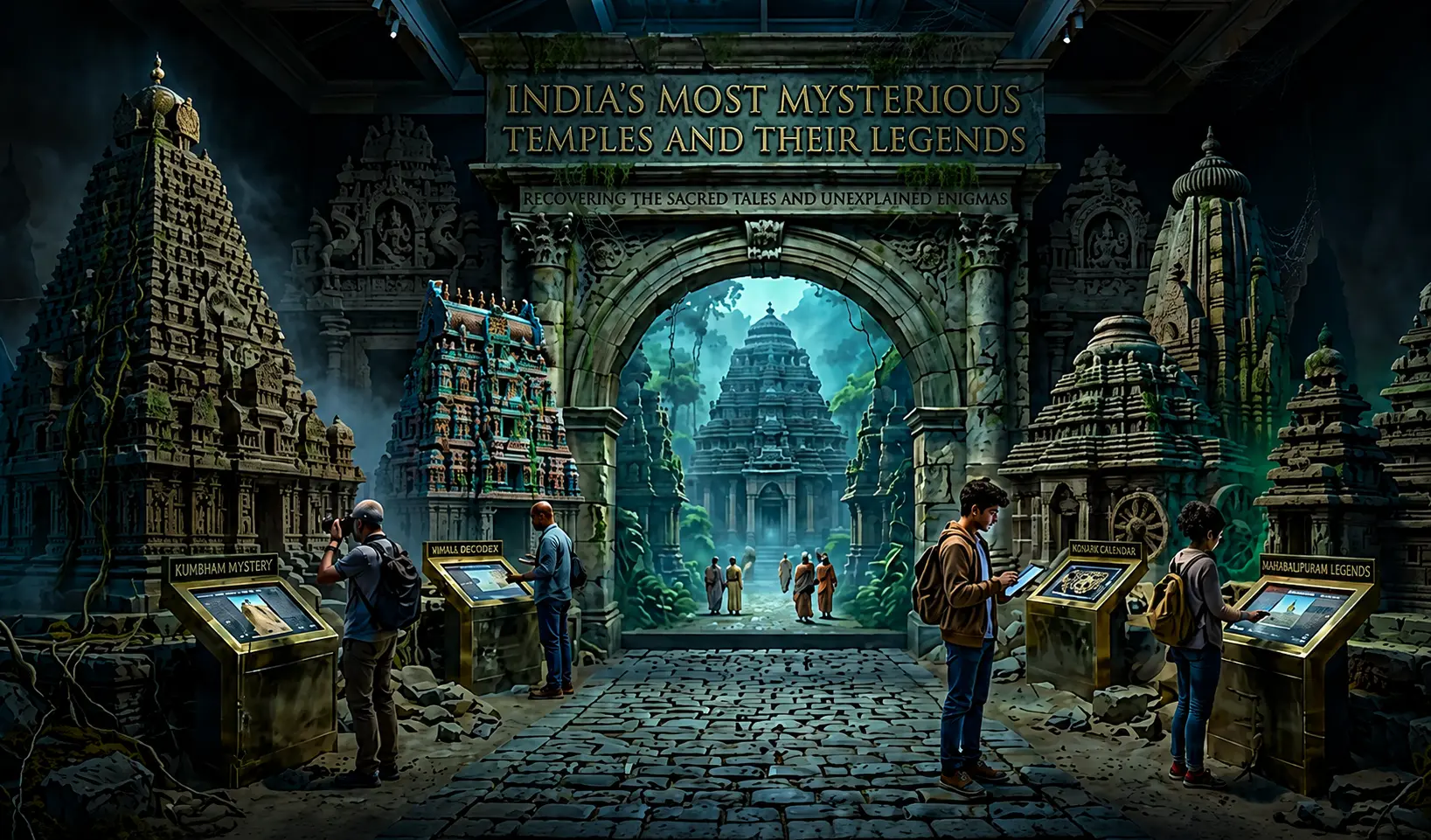
भारत के सबसे रहस्यमयी मंदिर और उनकी अनोखी कहानियाँ
भारत में हज़ारों मंदिर हैं।
लेकिन इनमें से कुछ सिर्फ पूजा की जगह नहीं हैं। ये पहेलियाँ हैं। पत्थर में लिपटी कहानियाँ। ऐसी जगहें जहाँ विज्ञान भी उन बातों को समझाने में पीछे रह जाता है जिन पर लोग सदियों से विश्वास करते आए हैं।
ये वो मंदिर हैं जहाँ अजीब घटनाएँ होती हैं। जहाँ किंवदंतियाँ कभी मरती नहीं। जहाँ आज भी किसी के पास पूरा जवाब नहीं है।
चलिए चलते हैं भारत के कुछ सबसे रहस्यमयी मंदिरों के अंदर।
कैलासा मंदिर, एलोरा: एक ही चट्टान से तराशा गया मंदिर
ज़रा सोचिए एक विशाल मंदिर। अब सोचिए कि यह मंदिर ईंट दर ईंट नहीं बनाया गया था। इसे एक ही विशाल चट्टान से तराशा गया था, ऊपर से नीचे की तरफ।
यह है महाराष्ट्र का कैलासा मंदिर।
8वीं सदी में राष्ट्रकूट वंश के राजा कृष्ण प्रथम के शासनकाल में बना यह मंदिर दुनिया के सबसे महान चट्टान-काट निर्माणों में से एक माना जाता है। यहाँ मज़दूरों ने दीवारें बनाने के लिए पत्थर नहीं जोड़े। उन्होंने एक पहाड़ी की चोटी से शुरुआत की और नीचे की तरफ काटते गए, लगभग दो लाख टन पत्थर हटाकर अंदर छिपे मंदिर को बाहर निकाला।
रहस्य यहाँ है। इतिहासकार आज भी इस बात पर बहस करते हैं कि प्राचीन मज़दूरों ने बिना आधुनिक औज़ारों के इतनी सटीकता कैसे हासिल की। न कोई क्रेन। न कोई मशीन। और एक बार पत्थर कट जाने के बाद गलती सुधारने का कोई रास्ता नहीं था।
एक गलत कट, और पूरा मंदिर ढह सकता था। फिर भी यह आज, एक हज़ार साल बाद भी, मज़बूती से खड़ा है।
कुछ शोधकर्ता मानते हैं कि इसे बनाने में दशकों लगे और हज़ारों मज़दूर लगे। बाकी सोचते हैं कि बिना आज जैसी इंजीनियरिंग तकनीक के इतनी जटिल योजना कैसे संभव हुई।
मंदिर आज भी अपना राज़ नहीं खोलता।
कामाख्या मंदिर, असम: जहाँ देवी का रक्तस्राव होता है
गुवाहाटी की नीलाचल पहाड़ी पर बसा कामाख्या मंदिर भारत की सबसे अनोखी किंवदंतियों में से एक समेटे हुए है।
मान्यता के अनुसार इस मंदिर में सामान्य तरीके से कोई मूर्ति नहीं रखी गई है। बल्कि यहाँ एक प्राकृतिक चट्टान संरचना है जिसे देवी कामाख्या के गर्भ और प्रजनन अंगों का प्रतीक माना जाता है।
हर साल मानसून के दौरान कुछ असाधारण होता है। मंदिर के नीचे बहने वाली एक धारा कुछ दिनों के लिए लाल रंग की हो जाती है, ऐसा माना जाता है। भक्तों का कहना है कि यह देवी के मासिक धर्म चक्र का संकेत है। इस समय को अंबुबाची मेला कहा जाता है, और इन तीन दिनों के लिए मंदिर के द्वार पूरी तरह बंद कर दिए जाते हैं।
वैज्ञानिक इसका एक सरल कारण बताते हैं, पानी में आयरन ऑक्साइड या प्राकृतिक खनिजों का मिलना। लेकिन लाखों भक्तों के लिए यह विश्वास विज्ञान से कहीं गहरा है।
जो बात कामाख्या को सच में अलग बनाती है वह है इसकी सोच। ज़्यादातर मंदिर मासिक धर्म को छिपाने वाली चीज़ मानते हैं। यह मंदिर इसे पवित्र और शक्तिशाली मानकर मनाता है। हर साल हज़ारों लोग यहाँ इस प्राकृतिक प्रक्रिया से नज़रें चुराने नहीं, बल्कि उसका सम्मान करने आते हैं।
केदारनाथ मंदिर: वह संरचना जो आपदा में भी बची रही
2013 में उत्तराखंड में भयानक बाढ़ आई। पूरे के पूरे गाँव बह गए। सड़कें गायब हो गईं। हज़ारों लोगों की जान गई।
और इसी तबाही के बीचों-बीच केदारनाथ मंदिर खड़ा रहा, बिल्कुल अछूता।
बाढ़ के दौरान पहाड़ों से विशाल चट्टानें बहकर आईं। एक खास चट्टान मंदिर के ठीक पीछे फँस गई, जिसने पानी के बहाव को दो दिशाओं में बाँट दिया। उसी एक चट्टान ने मंदिर को कुचलने से बचा लिया।
स्थानीय लोग इसे दैवीय सुरक्षा कहते हैं। भूवैज्ञानिक इसे चट्टान की स्थिति और भूभाग का एक प्राकृतिक संयोग मानते हैं। जो भी हो, एक हज़ार साल से ज़्यादा पुरानी संरचना उस क्षेत्र की सबसे भयानक प्राकृतिक आपदाओं में से एक में बची रही, जबकि उसके चारों तरफ सब कुछ तबाह हो गया।
माना जाता है कि यह मंदिर 1,200 साल से भी पुराना है और आदि शंकराचार्य से जुड़ा है। और उस बाढ़ के बाद इसकी किंवदंती और भी मज़बूत हो गई।
कोणार्क सूर्य मंदिर: वह रथ जो समय बताता है
ओडिशा के पूर्वी तट पर एक मंदिर खड़ा है जो एक विशाल पत्थर के रथ जैसा दिखता है, सात घोड़ों द्वारा खींचा गया और चौबीस पहियों पर टिका हुआ।
यह है कोणार्क सूर्य मंदिर, जो 13वीं सदी में राजा नरसिंहदेव प्रथम के शासनकाल में बना।
रहस्य यह है, इसके चौबीस पहिये सिर्फ सजावट नहीं हैं। ये सूर्यघड़ी की तरह काम करते हैं। अगर आप पहियों की तीलियों से बनने वाली परछाइयों को ध्यान से देखें, तो आप हैरान कर देने वाली सटीकता के साथ दिन का सही समय बता सकते हैं।
प्राचीन वास्तुकारों ने एक धार्मिक स्मारक के अंदर एक चलती हुई घड़ी बना दी, इतनी सटीक कि यह सदियों बाद भी आज काम करती है।
कुछ पुरानी कहानियाँ यह भी दावा करती हैं कि मूल मंदिर के शीर्ष पर एक विशाल चुंबकीय संरचना थी, इतनी शक्तिशाली कि वह पास के समुद्र में जहाज़ों को रास्ते से भटका देती थी। माना जाता है कि नाविक इसी वजह से इस तटरेखा से बचते थे। आज इसका कोई ठोस प्रमाण नहीं मिलता, लेकिन यह कहानी पीढ़ी दर पीढ़ी मंदिर के रहस्य के हिस्से के रूप में आगे बढ़ती रही है।
जगन्नाथ मंदिर, पुरी: वह झंडा जो हवा के खिलाफ लहराता है
पुरी के जगन्नाथ मंदिर में मुख्य गुंबद के सबसे ऊपर एक झंडा लगा है, जो ज़मीन से लगभग 214 फीट ऊँचाई पर है।
स्थानीय मान्यता कहती है कि यह झंडा हमेशा हवा की दिशा के विपरीत लहराता है। पीढ़ियों से भक्त और दर्शनार्थी इस बात को दोहराते आए हैं।
एक और अजीब परंपरा भी इस मंदिर के मुख्य झंडे से जुड़ी है। हर एक दिन, बिना किसी अपवाद के, एक पुजारी ऊपर चढ़कर हाथ से झंडा बदलता है, एक ऐसी परंपरा जो सदियों से बिना टूटे चली आ रही है। मान्यता है कि अगर एक भी दिन यह छूट जाए, तो मंदिर को अठारह साल के लिए बंद करना पड़ेगा।
मंदिर की परछाई को लेकर भी एक पहेली है। मुख्य गुंबद इस तरह बनाया गया है कि दिन के किसी भी समय, सूरज की स्थिति चाहे जो भी हो, इसकी परछाई दिखाई नहीं देती। इसका भी कोई स्पष्ट वैज्ञानिक कारण नहीं मिलता।
चाहे यह मिथक हो या तथ्य, इन परंपराओं ने सैकड़ों सालों से मंदिर की पहचान को आकार दिया है।
ये रहस्य आज भी क्यों मायने रखते हैं
इनमें से कुछ कहानियों को भूविज्ञान, रसायन विज्ञान, या प्राचीन इंजीनियरिंग की समझदारी से आंशिक रूप से समझाया जा सकता है।
बाकी आज भी पूरी तरह अनसुलझी हैं।
लेकिन इन मंदिरों को खास बनाने वाली बात यही है। ये सिर्फ पुरानी इमारतें नहीं हैं। ये उस दौर का प्रतिनिधित्व करते हैं जब वास्तुकारों ने वास्तुकला, खगोल विज्ञान, आस्था और इंजीनियरिंग को एक ही संरचना में पिरो दिया, आधुनिक विज्ञान के पास इसके लिए शब्द बनने से बहुत पहले।
चाहे आप दैवीय सुरक्षा में विश्वास करें या सिर्फ प्राचीन प्रतिभा की सराहना करें, एक बात साफ है। ये मंदिर सामान्य दिमागों ने नहीं बनाए थे।
इन्हें उन लोगों ने बनाया जो पत्थर, आकाश और समय के बारे में कुछ ऐसा समझते थे जिसे हम आज भी पूरी तरह समझने की कोशिश कर रहे हैं।
और शायद यही रहस्य है जिसकी वजह से ये मंदिर सदी दर सदी लोगों को अपनी ओर खींचते रहते हैं।
India's Most Mysterious Temples and Their Legends
India has thousands of temples.
But some of them are not just places of worship. They are riddles. Stories wrapped in stone. Places where science struggles to explain what locals have believed for centuries.
These are temples where strange things happen. Where legends refuse to die. Where even today, nobody has a complete answer.
Let's step inside some of India's most mysterious temples.
Kailasa Temple, Ellora: Carved From a Single Rock
Picture a massive temple. Now picture that this temple was not built brick by brick. It was carved out of one single, giant rock, from the top down.
That is Kailasa Temple in Maharashtra.
Built during the 8th century under King Krishna I of the Rashtrakuta dynasty, this temple is considered one of the greatest rock-cut structures in the world. Workers did not stack stones to build walls. They started from the top of a hill and carved downward, removing nearly 200,000 tonnes of rock to reveal the temple hidden inside.
Here is the mystery. Historians still debate how ancient workers managed such precision without modern tools. No cranes. No machines. No way to fix a mistake once stone was removed.
One wrong cut, and the entire temple's structure could have collapsed. Yet it stands strong even today, over a thousand years later.
Some researchers believe it took decades and thousands of workers. Others wonder how such complex planning was possible without anything close to today's engineering tools.
The temple still keeps its secret.
Kamakhya Temple, Assam: Where the Goddess Bleeds
Kamakhya Temple sits on Nilachal Hill in Guwahati, and it holds one of India's strangest legends.
According to belief, this temple does not house an idol in the usual sense. Instead, it has a natural rock formation believed to represent the womb and reproductive organs of Goddess Kamakhya.
Every year, during the monsoon, something unusual happens. A nearby stream that runs beneath the temple is believed to turn reddish for a few days. Devotees say this marks the goddess's menstrual cycle. During this period, called Ambubachi Mela, the temple closes its doors completely for three days.
Scientists offer a simpler explanation, iron oxide or natural minerals mixing with the water. But for millions of devotees, the belief runs far deeper than chemistry.
What makes Kamakhya truly different is its philosophy. Most temples treat menstruation as something to hide. This temple celebrates it as sacred and powerful. Thousands gather every year, not to look away from this natural process, but to honour it.
Kedarnath Temple: The Structure That Survived a Disaster
In 2013, devastating floods hit Uttarakhand. Entire villages were washed away. Roads disappeared. Thousands lost their lives.
Right in the middle of this destruction stood Kedarnath Temple, completely untouched.
Massive boulders came rushing down from the mountains during the flood. One particular rock got lodged just behind the temple, splitting the water flow into two directions. That single rock protected the temple from getting crushed.
Locals call it divine protection. Geologists call it a natural fluke of rock placement and terrain. Either way, a structure built over a thousand years ago survived one of the worst natural disasters the region had ever seen, while everything around it was destroyed.
The temple is believed to be over 1,200 years old, linked to Adi Shankaracharya. And after that flood, its legend only grew stronger.
Konark Sun Temple: The Chariot That Tells Time
On the eastern coast of Odisha stands a temple shaped like a giant stone chariot, pulled by seven horses and resting on twenty-four wheels.
This is the Konark Sun Temple, built in the 13th century under King Narasimhadeva I.
Here is what makes it mysterious. Each of the twenty-four wheels is not just decoration. They function as sundials. If you look closely at the shadows cast by the spokes, you can calculate the exact time of day with surprising accuracy.
Ancient architects built a working clock into a religious monument, accurate enough that it still works today, centuries later.
There are also old stories claiming the original temple had a massive magnetic structure at its top, powerful enough to pull ships off course in the nearby sea. Sailors supposedly avoided the coastline because of it. No solid evidence confirms this today, but the story has survived for generations, passed down as part of the temple's mystery.
Jagannath Temple, Pur: The Flag That Defies Wind
At the Jagannath Temple in Puri, a flag sits at the very top of the main dome, standing nearly 214 feet above the ground.
Local belief states that this flag always flutters in the opposite direction of the wind. Visitors and devotees have repeated this claim for generations.
Another strange tradition involves the temple's main flag. Every single day, without exception, a priest climbs to the top and changes the flag by hand, a tradition that has reportedly continued unbroken for centuries. According to belief, if even one day is missed, the temple would have to close for eighteen years.
There is also the puzzle of the temple's shadow. The main dome is built in a way that its shadow is invisible at any time of day, no matter the sun's position. No clear scientific explanation exists for this either.
Whether myth or fact, these traditions have shaped the temple's identity for hundreds of years.
Why These Mysteries Still Matter
Some of these stories can be partly explained through geology, chemistry, or smart ancient engineering.
Others remain completely unexplained, even today.
But here is what makes these temples special. They are not just old buildings. They represent a time when builders combined architecture, astronomy, faith, and engineering into a single structure, long before modern science had words for any of it.
Whether you believe in divine protection or simply admire ancient genius, one thing is clear. These temples were not built by ordinary minds.
They were built by people who understood something about stone, sky, and time that we are still trying to fully understand today.
And maybe that mystery is exactly why these temples continue to pull people in, century after century.


Be the first to comment on this post.