



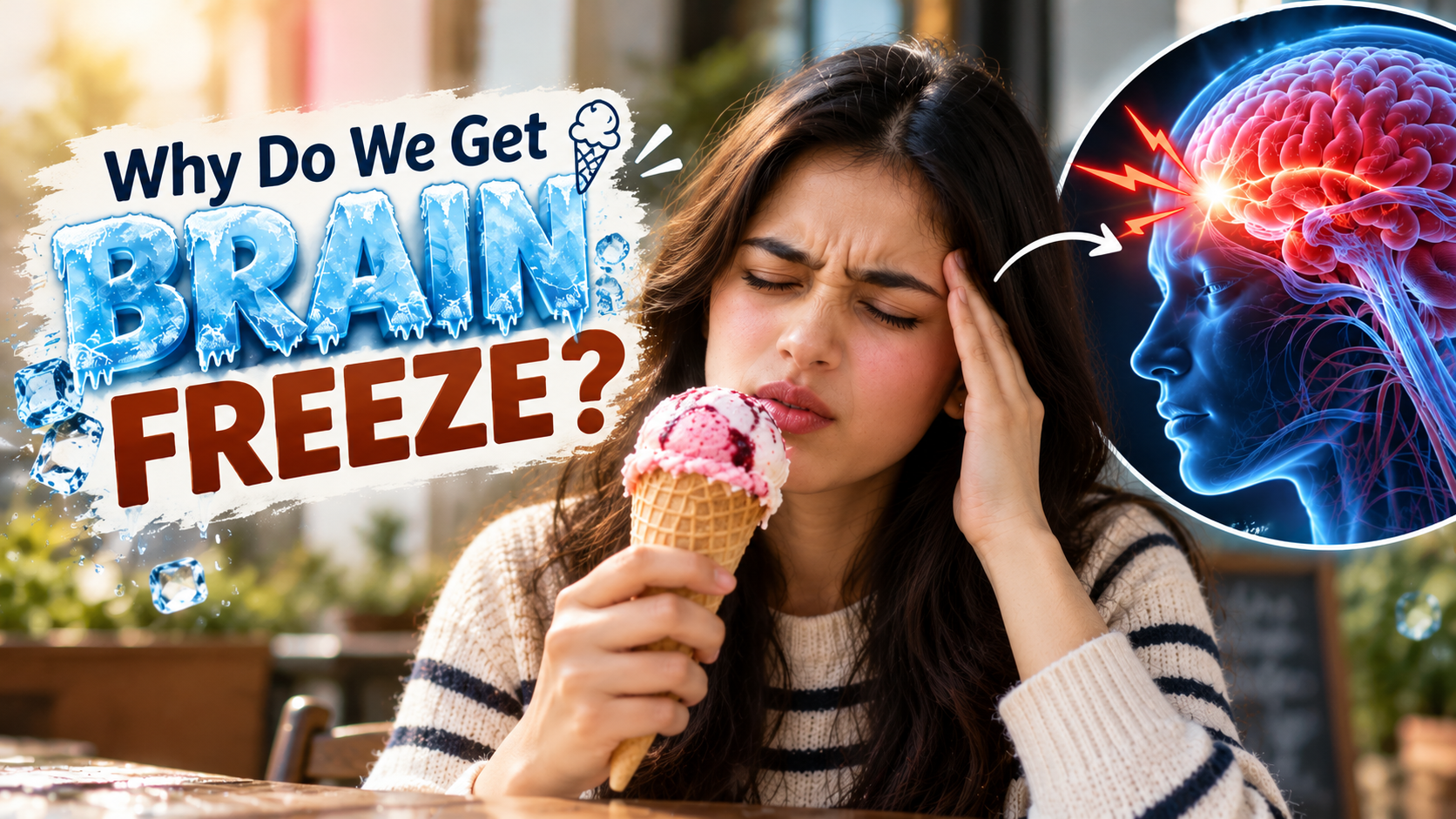
Why Do We Get Brain Freeze? The Science Explained
Have you ever taken a big bite of ice cream or gulped down a cold drink and suddenly felt a sharp pain in your forehead? That sudden, uncomfortable feeling is commonly known as brain freeze.
It can happen in just a few seconds and usually disappears almost as quickly as it arrives. But have you ever wondered why eating something cold can cause pain in your head when the cold food never actually touches your brain?
Let's explore the science behind brain freeze and understand why it happens.
What Is Brain Freeze?
Brain freeze, scientifically known as cold-stimulus headache, is a brief headache triggered by eating or drinking something very cold.
It commonly occurs when cold food, such as ice cream, ice pops, or chilled drinks, rapidly cools the roof of your mouth. The pain may be felt in the forehead, temples, or the area behind the eyes.
Unlike some other headaches, brain freeze usually lasts only a few seconds, although it can sometimes last a little longer.
The good news? It is generally harmless and goes away on its own.
Why Do We Get Brain Freeze?
The main reason behind brain freeze is the rapid cooling of the roof of your mouth, also called the palate.
Here's what happens inside your body:
1. Cold Food Cools the Roof of Your Mouth
When you eat ice cream or drink something extremely cold too quickly, the temperature inside your mouth drops suddenly.
The roof of your mouth contains sensitive tissues, blood vessels, and nerves that respond to changes in temperature.
2. Your Nerves Detect the Sudden Temperature Change
The rapid cooling stimulates sensory nerves in the mouth, including branches of the trigeminal nerve.
The trigeminal nerve is responsible for carrying many types of sensory information from your face and mouth to your brain.
Because this nerve also carries sensations from areas of your head, the signals associated with the cold stimulus can be perceived as pain in your forehead or temples.
3. Changes in Blood Flow May Contribute
Rapid temperature changes can also affect the blood vessels in the mouth and surrounding areas.
Researchers believe that changes in blood vessel activity, along with nerve responses to the cold stimulus, help explain why brain freeze occurs. The exact mechanism is not completely understood.
The important point is that brain freeze is caused by your body's response to the cold stimulus, not by your brain actually freezing.
Why Does Brain Freeze Hurt Your Forehead?
This is one of the most interesting things about brain freeze.
You feel the cold food in your mouth, but the pain often appears in your forehead. Why?
This happens because of a phenomenon called referred pain.
Referred pain occurs when the brain interprets signals from one area of the body as pain coming from another area. The trigeminal nerve carries sensory information from the mouth and several parts of the head, helping explain why the pain can feel as though it is coming from your forehead.
So, even though the cold stimulus is inside your mouth, your brain may perceive the resulting pain somewhere else.
How Can You Stop Brain Freeze?
The next time brain freeze strikes, you don't need to panic. A few simple steps can help it settle faster.
1. Stop eating or drinking the cold item.
Give your mouth a moment to return to its normal temperature.
2. Press your tongue against the roof of your mouth.
Your tongue can help warm the cooled area and may reduce the discomfort.
3. Drink a little lukewarm water.
A small sip can help warm your mouth. Avoid drinking anything extremely hot, especially when your mouth is very cold.
4. Eat or drink cold foods more slowly.
Taking smaller bites of ice cream and avoiding large gulps of icy drinks can help prevent brain freeze.
In most cases, the pain disappears within seconds without any special treatment.
Can You Prevent Brain Freeze?
Yes, you can reduce the chances of experiencing brain freeze by making a few small changes to how you eat and drink cold foods.
-
Eat ice cream slowly instead of taking large bites.
-
Allow extremely cold foods to warm slightly in your mouth before swallowing.
-
Take smaller sips of chilled drinks.
-
Avoid rapidly consuming very cold foods, especially when you notice that you are prone to brain freeze.
These simple habits can make enjoying your favourite cold treats much more comfortable.
Is Brain Freeze Dangerous?
Brain freeze is usually harmless and temporary. It does not mean your brain is becoming too cold, and it does not cause your brain to freeze.
However, if a headache is unusually severe, lasts much longer than a typical brain freeze, happens frequently without an obvious cold trigger, or comes with other concerning symptoms, seek medical advice.
A sudden, extremely severe headache or a headache accompanied by weakness, confusion, fainting, or difficulty speaking requires urgent medical attention.
Interesting Facts About Brain Freeze
Here are a few fascinating facts about this everyday scientific phenomenon:
-
Its scientific name: Brain freeze is commonly called a cold-stimulus headache.
-
It happens quickly: The pain can begin within seconds of eating or drinking something very cold.
-
Your brain doesn't freeze: The pain comes from your body's response to the cold stimulus.
-
It is usually short-lived: Most episodes disappear quickly once the cold stimulus stops.
-
It involves your nerves: The trigeminal nerve plays an important role in how the pain is perceived.
Conclusion
Brain freeze is a perfect example of how fascinating the human body can be. A simple bite of ice cream can trigger a series of responses involving sensitive nerves, temperature changes, and possibly changes in blood vessel activity.
The next time you experience that sudden forehead pain while enjoying a cold treat, remember that your brain isn't freezing. Your nervous system is responding to a rapid change in temperature.
So, enjoy your ice cream, take smaller bites, and let science explain the little surprises your body creates!
Keep learning with Fukey Education, where everyday questions lead to fascinating scientific discoveries.
Frequently Asked Questions (FAQs)
1. What causes brain freeze?
Brain freeze is triggered when something very cold rapidly cools the roof of your mouth, stimulating sensory nerves and producing a brief headache.
2. Why does brain freeze hurt the forehead?
The trigeminal nerve carries sensory signals from the mouth and head. The brain can interpret the resulting signals as pain in the forehead or temples, a phenomenon related to referred pain.
3. How long does brain freeze last?
Brain freeze usually lasts a few seconds, although it can occasionally last longer. It generally resolves when the cold stimulus stops.
4. How do you get rid of brain freeze quickly?
Stop consuming the cold food, press your tongue against the roof of your mouth to help warm it, or take a small sip of lukewarm water.
5. Is brain freeze harmful?
Brain freeze is generally harmless and temporary. A severe, persistent, or unusual headache should not automatically be attributed to brain freeze and may require medical evaluation.
Blog Tags: Brain Freeze, Why Do We Get Brain Freeze, Brain Freeze Explained, Science Facts, Human Body Facts, Interesting Science Facts, Ice Cream Headache, Cold-Stimulus Headache, Brain Freeze Causes, Brain Freeze Prevention, Science Behind Everyday Life, Educational Blog, Fukey Education.
when referencing medical or scientific information.


Be the first to comment on this post.