



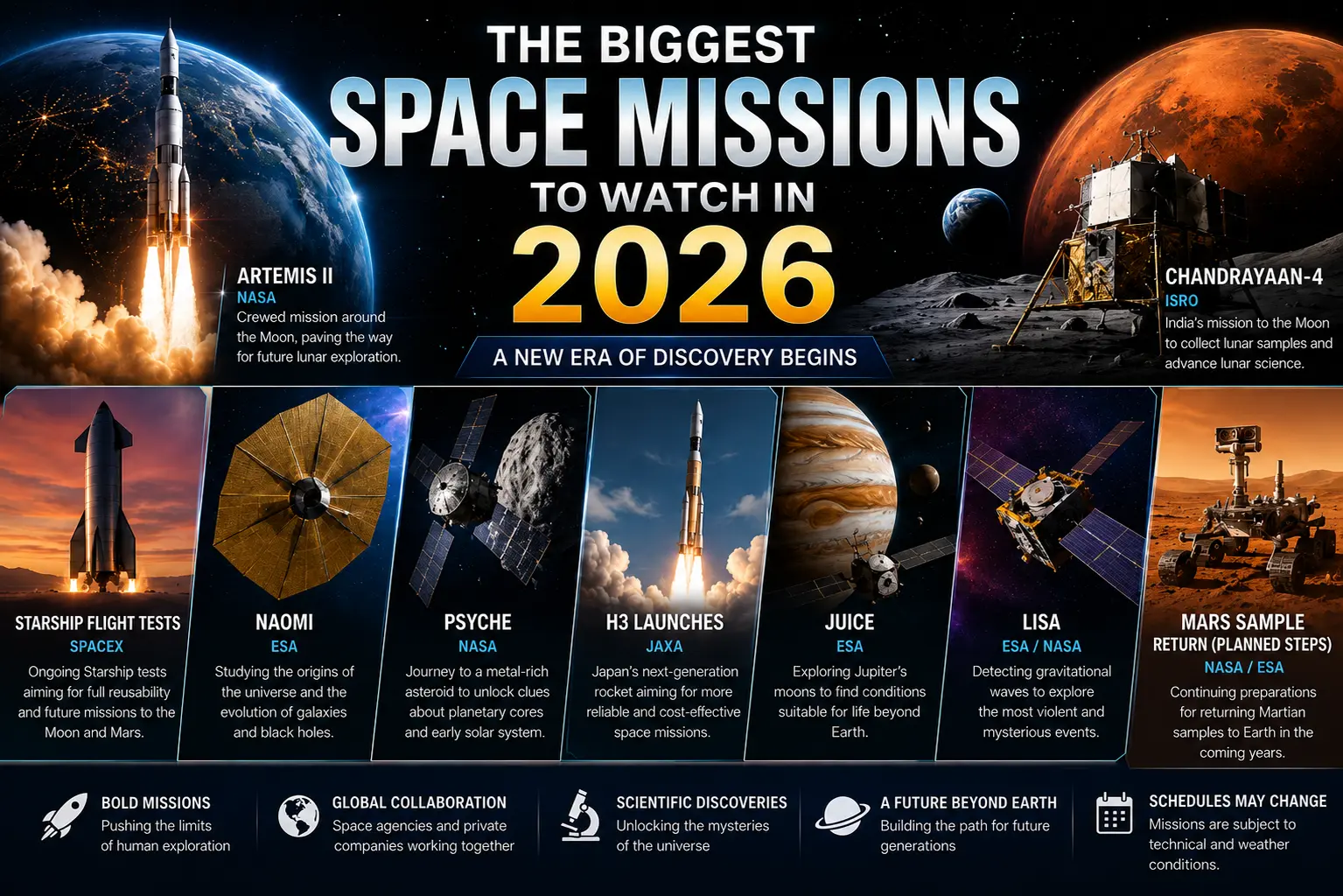
2026 में देखने लायक सबसे बड़े अंतरिक्ष मिशन
क्या 2026 वह साल साबित होगा जब इंसान फिर से चंद्रमा की ओर लौटने की शुरुआत करेगा?
कल्पना कीजिए कि आने वाले वर्षों में चंद्रमा पर स्थायी मानव बस्तियां बसने लगें। यह अब केवल विज्ञान-कथा नहीं रह गई है। दशकों तक रोबोटिक मिशनों और धीमी प्रगति के बाद, 2026 अंतरिक्ष विज्ञान के इतिहास के सबसे व्यस्त और रोमांचक वर्षों में से एक बनने जा रहा है। अंतरिक्ष यात्री चंद्रमा की उड़ान की तैयारी कर रहे हैं, रोबोट नए ग्रहों और क्षुद्रग्रहों की खोज में निकल रहे हैं, और कई अंतरिक्ष यान वर्षों की यात्रा पूरी करके अपने गंतव्य तक पहुंचने वाले हैं।
अगर आप पूरे साल केवल एक ही विषय पर नजर रखना चाहते हैं, तो 2026 का अंतरिक्ष अभियान सबसे दिलचस्प साबित होगा।
2026 अंतरिक्ष अन्वेषण के लिए इतना खास क्यों है?
इस वर्ष कई बड़े मिशन या तो लॉन्च होंगे या अपने अंतिम गंतव्य तक पहुंचेंगे। लगभग 50 वर्षों बाद इंसानों की चंद्रमा के आसपास वापसी होने जा रही है। कई अंतरिक्ष यान, जिन्हें वर्षों पहले भेजा गया था, अब बुध ग्रह, क्षुद्रग्रहों और मंगल के चंद्रमाओं तक पहुंचेंगे। साथ ही नई पीढ़ी की दूरबीनें पृथ्वी जैसे ग्रहों की खोज के लिए अंतरिक्ष में भेजी जाएंगी।
एक नजर में
-
Artemis II 1972 के बाद पहली बार अंतरिक्ष यात्रियों को चंद्रमा के चारों ओर लेकर जाएगा।
-
ISRO का Gaganyaan-1 भारत के पहले मानव अंतरिक्ष मिशन की तैयारी का महत्वपूर्ण परीक्षण होगा।
-
ESA का BepiColombo आठ साल की यात्रा के बाद बुध ग्रह की कक्षा में प्रवेश करेगा।
-
Hera मिशन NASA के DART मिशन द्वारा टकराए गए क्षुद्रग्रह Dimorphos का अध्ययन करेगा।
-
JAXA का MMX मिशन मंगल के चंद्रमा Phobos से नमूना लाने का प्रयास करेगा।
NASA: Artemis II दिखाएगा नई राह
उद्देश्य: Orion अंतरिक्ष यान का परीक्षण करते हुए अंतरिक्ष यात्रियों को चंद्रमा के चारों ओर भेजना।
गंतव्य: चंद्रमा की कक्षा (बिना लैंडिंग के)
यह क्यों महत्वपूर्ण है?
Apollo मिशनों के बाद पहली बार इंसान चंद्रमा के आसपास यात्रा करेंगे। तीन NASA अंतरिक्ष यात्री और एक Canadian Space Agency का सदस्य लगभग दस दिनों तक अंतरिक्ष में रहकर उन प्रणालियों का परीक्षण करेंगे जो भविष्य में चंद्रमा पर मानव लैंडिंग का आधार बनेंगी।
ISRO: Gaganyaan-1 से भारत की मानव अंतरिक्ष यात्रा को मिलेगी गति
उद्देश्य: जीवन-रक्षक प्रणालियों, पैराशूट और समुद्र में सुरक्षित वापसी प्रणाली का परीक्षण करना।
गंतव्य: निम्न पृथ्वी कक्षा (Low Earth Orbit), जिसके बाद बंगाल की खाड़ी में स्प्लैशडाउन।
यह क्यों महत्वपूर्ण है?
Gaganyaan-1 भारत के पहले मानव अंतरिक्ष मिशन की दिशा में सबसे महत्वपूर्ण कदम माना जा रहा है। इस मिशन की सफलता यह तय करेगी कि भारतीय अंतरिक्ष यात्री कब अंतरिक्ष की यात्रा करेंगे।
ESA और JAXA: BepiColombo पहुंचेगा बुध ग्रह
उद्देश्य: बुध ग्रह की सतह, आंतरिक संरचना और उसके पतले वायुमंडल का अध्ययन करना।
गंतव्य: बुध ग्रह
यह क्यों महत्वपूर्ण है?
आठ अरब किलोमीटर से अधिक की यात्रा के बाद BepiColombo बुध ग्रह की कक्षा में प्रवेश करेगा। इसके बाद यह दो अलग-अलग ऑर्बिटर में विभाजित होकर ग्रह का अब तक का सबसे विस्तृत अध्ययन करेगा और वैज्ञानिकों को सौर मंडल के सबसे छोटे ग्रह के बारे में नई जानकारी देगा।
ESA: Hera मिशन करेगा क्षुद्रग्रह का अध्ययन
उद्देश्य: NASA के DART मिशन द्वारा प्रभावित Dimorphos क्षुद्रग्रह का विश्लेषण करना।
गंतव्य: Didymos-Dimorphos क्षुद्रग्रह प्रणाली
यह क्यों महत्वपूर्ण है?
Hera यह जांचेगा कि DART मिशन की टक्कर से क्षुद्रग्रह की दिशा और संरचना में कितना बदलाव आया। यह जानकारी भविष्य में पृथ्वी की ओर आने वाले खतरनाक क्षुद्रग्रहों को मोड़ने की तकनीक विकसित करने में मदद करेगी।
JAXA: Martian Moons eXploration (MMX)
उद्देश्य: मंगल के चंद्रमा Phobos की परिक्रमा करना और वहां से मिट्टी का नमूना एकत्र करना।
गंतव्य: Phobos (मंगल का चंद्रमा)
यह क्यों महत्वपूर्ण है?
अब तक किसी भी मिशन ने मंगल के किसी चंद्रमा से नमूना वापस नहीं लाया है। MMX मिशन यह समझने में मदद करेगा कि Phobos वास्तव में एक पकड़ा गया क्षुद्रग्रह है या किसी प्राचीन टक्कर से बना हुआ पिंड।
निजी कंपनियां भी हैं अंतरिक्ष की नई खिलाड़ी
2026 में कई निजी कंपनियां भी चंद्रमा की ओर अपने मिशन भेज रही हैं।
-
Firefly Aerospace का Blue Ghost Mission 2 चंद्रमा के दूर वाले हिस्से पर उतरने की कोशिश करेगा।
-
Intuitive Machines अपना तीसरा Nova-C लैंडर IM-3 लॉन्च करने की तैयारी कर रही है।
-
Blue Origin अपने Blue Moon Mark 1 मिशन के जरिए पहली बार बिना चालक वाला चंद्र लैंडर भेजने की योजना बना रही है।
यह दिखाता है कि अब अंतरिक्ष अन्वेषण केवल सरकारी एजेंसियों तक सीमित नहीं रह गया है।
नई दूरबीनें खोजेंगी पृथ्वी जैसे ग्रह
यूरोपीय अंतरिक्ष एजेंसी का PLATO टेलीस्कोप दूर स्थित तारों के आसपास पृथ्वी जैसे ग्रहों की खोज करेगा।
वहीं NASA का Nancy Grace Roman Space Telescope डार्क एनर्जी और एक्सोप्लैनेट्स का अध्ययन करेगा। इसकी क्षमता Hubble Space Telescope से कहीं अधिक व्यापक होगी।
ये मिशन भविष्य को कैसे बदलेंगे?
Artemis II और Gaganyaan-1 भविष्य में चंद्रमा और मंगल पर मानव मिशनों की नींव मजबूत करेंगे।
BepiColombo और Hera हमारे सौर मंडल के ग्रहों और क्षुद्रग्रहों को बेहतर तरीके से समझने में मदद करेंगे।
MMX और नई अंतरिक्ष दूरबीनें यह पता लगाने में सहायता करेंगी कि ग्रह और उनके चंद्रमा कैसे बनते हैं और क्या पृथ्वी जैसे अन्य ग्रहों पर जीवन संभव हो सकता है।
साथ ही, निजी कंपनियों की बढ़ती भागीदारी यह संकेत देती है कि भविष्य में अंतरिक्ष यात्रा पहले से अधिक तेज और सुलभ हो सकती है।
ध्यान रखें कि अंतरिक्ष मिशनों की लॉन्च तिथियां तकनीकी जांच, मौसम या सुरक्षा कारणों से बदल सकती हैं।
निष्कर्ष
2026 अंतरिक्ष विज्ञान के लिए एक ऐतिहासिक वर्ष बनने की पूरी क्षमता रखता है। इस वर्ष इंसानों की चंद्रमा के आसपास वापसी, अंतरराष्ट्रीय सहयोग, क्षुद्रग्रहों और ग्रहों की नई खोजें तथा आधुनिक अंतरिक्ष दूरबीनों की लॉन्चिंग एक साथ देखने को मिलेगी।
NASA, ESA, ISRO और JAXA जैसी एजेंसियां अब केवल अपने-अपने मिशन नहीं चला रहीं, बल्कि एक-दूसरे के डेटा और तकनीक का भी उपयोग कर रही हैं। यदि इन मिशनों का अधिकांश हिस्सा सफल रहता है, तो 2026 वह साल होगा जब मानवता ने पृथ्वी की सीमाओं से आगे बढ़कर अंतरिक्ष में अपने भविष्य की नई दिशा तय की।
तुलना तालिका
मिशन
एजेंसी
उद्देश्य
गंतव्य
Artemis II
NASA
मानवयुक्त चंद्र फ्लाईबाय
चंद्रमा की कक्षा
Gaganyaan-1
ISRO
मानव अंतरिक्ष मिशन का परीक्षण
निम्न पृथ्वी कक्षा
BepiColombo
ESA/JAXA
बुध ग्रह का अध्ययन
बुध ग्रह
Hera
ESA
DART प्रभाव का विश्लेषण
Didymos-Dimorphos
MMX
JAXA
Phobos से नमूना संग्रह
मंगल का चंद्रमा Phobos
Blue Ghost Mission 2
Firefly Aerospace/NASA
चंद्रमा के दूर वाले हिस्से पर लैंडिंग
चंद्रमा
PLATO
ESA
पृथ्वी जैसे ग्रहों की खोज
अंतरिक्ष वेधशाला
अक्सर पूछे जाने वाले प्रश्न (FAQ)
प्रश्न 1: 2026 अंतरिक्ष मिशनों के लिए इतना महत्वपूर्ण क्यों माना जा रहा है?
क्योंकि इस वर्ष मानवयुक्त चंद्र मिशन, क्षुद्रग्रह अध्ययन, ग्रहों की खोज और नई अंतरिक्ष दूरबीनों के लॉन्च जैसे कई बड़े अभियान एक साथ हो रहे हैं।
प्रश्न 2: क्या Artemis II चंद्रमा पर उतरेगा?
नहीं। यह केवल चंद्रमा की परिक्रमा करेगा और फिर पृथ्वी पर वापस लौट आएगा।
प्रश्न 3: Gaganyaan-1 का मुख्य उद्देश्य क्या है?
यह भारत के पहले मानव अंतरिक्ष मिशन से पहले जीवन-रक्षक प्रणालियों और सुरक्षित वापसी तकनीक का परीक्षण करेगा।
प्रश्न 4: Hera मिशन क्यों महत्वपूर्ण है?
यह DART मिशन के प्रभाव का अध्ययन करेगा और भविष्य में पृथ्वी को क्षुद्रग्रहों से बचाने की रणनीति विकसित करने में मदद करेगा।
प्रश्न 5: क्या इन मिशनों की तिथियां बदल सकती हैं?
हाँ। तकनीकी समस्याओं, मौसम या सुरक्षा कारणों से अंतरिक्ष मिशनों के लॉन्च और आगमन की समय-सीमा में बदलाव हो सकता है।
What if this turns out to be the year humans finally head back toward the Moon with real plans to stay?
After decades of robotic visits and quiet progress, 2026 is shaping up to be one of the busiest years in space history. Astronauts are training for lunar flybys, robots are landing on new worlds, and spacecraft are arriving at places we have barely explored. If you only follow one year of space news, this is the one to watch.
Why 2026 Is Such a Big Year for Space Exploration
Several major missions are reaching their destinations or launching for the first time this year. Crewed lunar travel is returning after more than fifty years. Spacecraft launched years ago are finally arriving at asteroids and distant planets. New telescopes are heading into orbit to search for Earth-like worlds. This rare lineup is exactly why 2026 stands out among the biggest space missions to watch in 2026.
Quick Facts
-
Artemis II is set to send astronauts around the Moon for the first time since 1972.
-
ISRO's Gaganyaan-1 uncrewed test flight supports India's first human spaceflight goals.
-
ESA's BepiColombo is expected to enter orbit around Mercury after an eight-year journey.
-
Hera will study the asteroid Dimorphos, hit by NASA's DART spacecraft in 2022.
-
JAXA's MMX mission aims to bring back the first-ever sample from a moon of Mars.
NASA: Artemis II Leads the Way
Objective: Send astronauts on a flyby around the Moon to test the Orion spacecraft.
Destination: Lunar orbit, without landing.
Why it matters: This is the first crewed mission to travel around the Moon since the Apollo era. Three NASA astronauts and one Canadian Space Agency astronaut will spend about ten days testing systems needed for an eventual Moon landing.
ISRO: Gaganyaan-1 Tests the Path to Human Spaceflight
Objective: Fly an uncrewed test mission to check life-support systems, parachutes, and splashdown procedures.
Destination: Low Earth orbit, with a planned splashdown in the Bay of Bengal.
Why it matters: This mission is a major step toward India's first crewed spaceflight. Among ISRO upcoming missions, Gaganyaan-1 carries the most weight, since its success directly shapes the timeline for sending Indian astronauts to space.
ESA and JAXA: BepiColombo Reaches Mercury
Objective: Study Mercury's surface, interior, and thin atmosphere.
Destination: Mercury.
Why it matters: After traveling more than eight billion kilometres, BepiColombo is expected to enter orbit around Mercury. The spacecraft will then split into two separate orbiters, one built by ESA and one by JAXA, giving scientists their closest look yet at the Sun's nearest neighbour.
ESA: Hera Arrives at Didymos and Dimorphos
Objective: Examine the asteroid pair struck by NASA's DART spacecraft in 2022.
Destination: The Didymos-Dimorphos asteroid system.
Why it matters: Hera will study how much DART's impact changed Dimorphos, helping scientists understand how future missions could redirect a dangerous asteroid away from Earth.
JAXA: Martian Moons eXploration (MMX)
Objective: Orbit and eventually land on Phobos, one of Mars's two small moons, and collect a surface sample.
Destination: Phobos, a moon of Mars.
Why it matters: No mission has ever returned a sample from a moon of Mars. The data could finally answer whether Phobos is a captured asteroid or debris from an ancient impact.
Commercial and Lunar Lander Missions
Several private companies are also racing toward the Moon this year. Firefly Aerospace plans its Blue Ghost Mission 2, aiming for the lunar far side. Intuitive Machines is preparing its third Nova-C lander, IM-3. Blue Origin is set to attempt its first lunar landing with the uncrewed Blue Moon Mark 1. These missions reflect the growing role private companies now play among NASA missions 2026, often carrying instruments for government space agencies alongside their own technology tests.
New Telescopes Searching for Distant Worlds
ESA's PLATO telescope is expected to launch toward the end of 2026, designed to search for Earth-sized planets around distant stars. NASA's Nancy Grace Roman Space Telescope is also nearing launch readiness, built to study dark energy and exoplanets with a much wider field of view than Hubble. Together, these missions represent a major leap forward in future space exploration and our search for worlds similar to our own.
How These Missions Shape the Future
Each of these missions adds a piece to a much bigger picture. Artemis II and Gaganyaan-1 build the human spaceflight skills needed for future Moon and Mars missions. BepiColombo and Hera deepen our understanding of planets and asteroids close to home. MMX and the new telescopes push the search for answers about how moons, planets, and distant solar systems form. Commercial landers, meanwhile, show how private companies are becoming essential partners in space exploration, not just spectators.
It's worth remembering that launch schedules in spaceflight often shift due to technical checks, weather, or last-minute safety reviews, so some dates mentioned here may move as the year goes on.
Conclusion and Future Outlook
Among the biggest space missions to watch in 2026, a few themes stand out: a return to crewed lunar travel, growing international cooperation, and a serious push toward understanding asteroids, distant moons, and faraway planets. Agencies like NASA, ESA, ISRO, and JAXA are no longer working in isolation. They are increasingly building on each other's data and even sharing spacecraft. If even half of these missions go as planned, 2026 will be remembered as the year space exploration shifted gears, moving the world closer to a future where humans regularly travel beyond low Earth orbit.
5. Comparison Table
Mission
Agency
Objective
Destination
Artemis II
NASA
Crewed lunar flyby, test Orion spacecraft
Lunar orbit
Gaganyaan-1
ISRO
Uncrewed test of life-support and splashdown systems
Low Earth orbit / Bay of Bengal
BepiColombo
ESA/JAXA
Study Mercury's surface and magnetic field
Mercury
Hera
ESA
Study asteroid Dimorphos after DART impact
Didymos-Dimorphos system
MMX
JAXA
Orbit and sample Phobos, a moon of Mars
Phobos (Mars)
Blue Ghost Mission 2
Firefly Aerospace/NASA
Land on the lunar far side, deliver payloads
Moon (far side)
PLATO
ESA
Search for Earth-sized exoplanets
Earth orbit (deep space observation)
6. FAQ Section
Q1: What makes 2026 such an important year for space missions?
2026 brings together a crewed lunar flyby, several asteroid and planetary arrivals, and major new telescope launches, making it one of the busiest years in recent spaceflight history.
Q2: Is Artemis II a Moon landing mission?
No. Artemis II is a flyby mission. Astronauts will travel around the Moon and return to Earth without landing.
Q3: What is the goal of ISRO's Gaganyaan-1 mission?
Gaganyaan-1 is an uncrewed test flight meant to check life-support systems and splashdown procedures ahead of India's first crewed spaceflight.
Q4: Why is the Hera mission important?
Hera will study how much NASA's DART mission changed the asteroid Dimorphos, helping scientists plan future asteroid deflection efforts.
Q5: Could these mission dates change?
Yes. Launch schedules in spaceflight are often adjusted due to technical issues, weather conditions, or safety reviews, so timelines may shift during the year.


Be the first to comment on this post.