



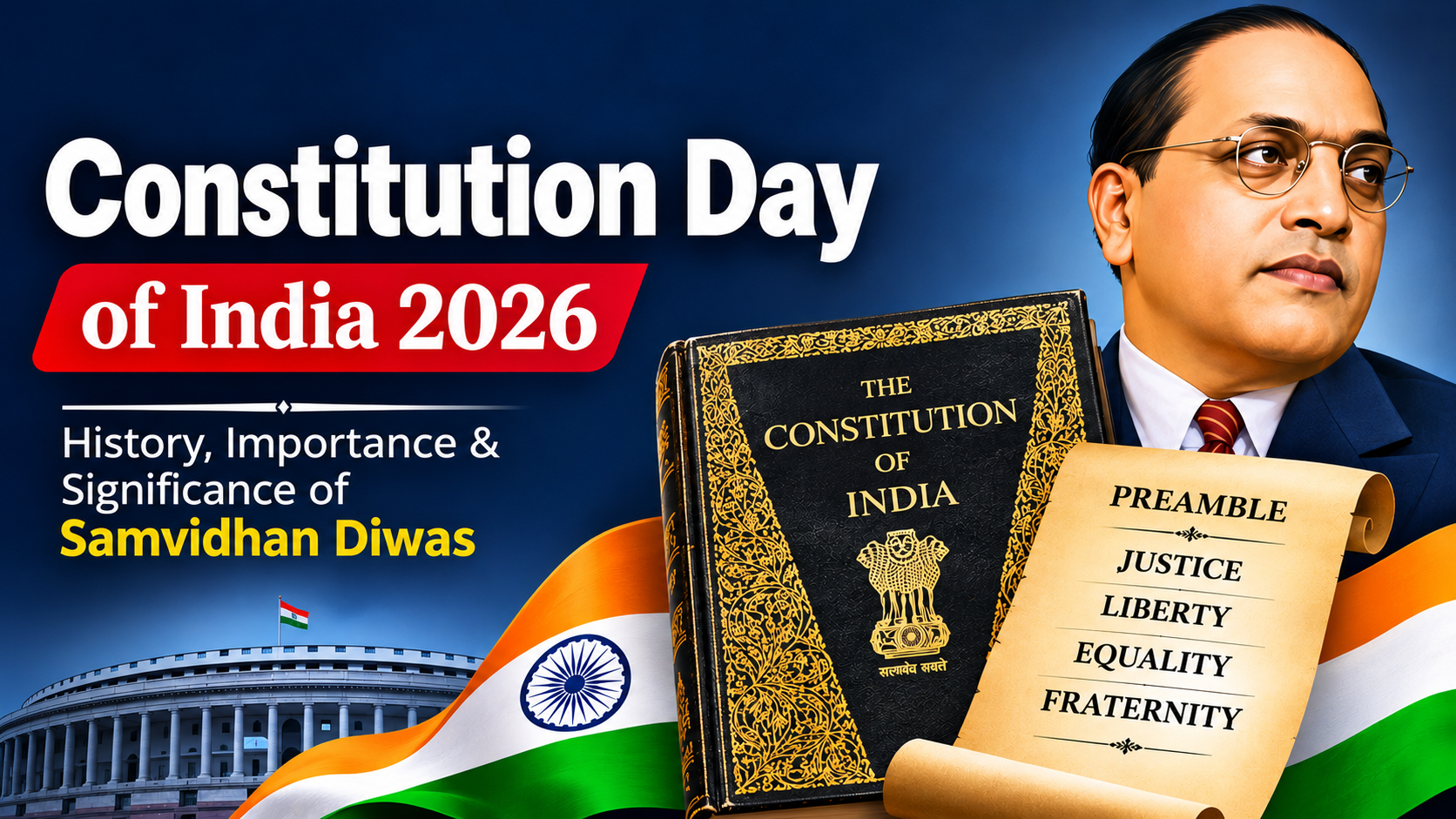
Constitution Day 2026: History, Importance and Significance of Samvidhan Diwas in India
Constitution Day 2026, also known as Samvidhan Diwas, is celebrated across India on 26 November every year to commemorate the adoption of the Indian Constitution in 1949. This historic day reminds every Indian citizen of the fundamental principles of justice, liberty, equality and fraternity that form the foundation of Indian democracy.
The Constitution of India is the supreme law of the country. It protects citizens' rights, defines their duties and establishes the framework for how the government functions.
For students, understanding the importance of Constitution Day is essential because it helps develop constitutional awareness, democratic values and responsible citizenship.
At Fukey Education, we believe that education goes beyond academic learning. It also means understanding our country, its history, democratic values and responsibilities as citizens.
What Is Constitution Day (Samvidhan Diwas)?
Constitution Day, popularly known as Samvidhan Diwas, is observed on 26 November to celebrate the adoption of the Constitution of India by the Constituent Assembly on 26 November 1949.
Although the Constitution was adopted in 1949, it officially came into effect on 26 January 1950. This is why India celebrates 26 January as Republic Day.
The Government of India officially declared 26 November as Constitution Day in 2015 to promote awareness about the Indian Constitution and its significance among citizens.
History of Constitution Day in India
The journey of the Indian Constitution began after India gained independence in 1947. The Constituent Assembly was responsible for preparing a Constitution that would guide the newly independent nation.
The Assembly worked extensively to develop a democratic framework that guaranteed fundamental rights and equality to all citizens.
Important historical milestones include:
-
9 December 1946: The first meeting of the Constituent Assembly.
-
29 August 1947: The Drafting Committee was established under the chairmanship of Dr. B. R. Ambedkar.
-
26 November 1949: The Constitution of India was adopted.
-
26 January 1950: The Constitution came into effect, establishing India as a republic.
These milestones represent an important chapter in the history of Indian democracy.
Dr. B. R. Ambedkar: The Architect of the Indian Constitution
Dr. Bhimrao Ramji Ambedkar is widely known as the chief architect of the Indian Constitution. As the Chairman of the Drafting Committee, he played a crucial role in preparing the constitutional framework of independent India.
His vision focused on establishing a society based on equality, justice, liberty and equal opportunities.
Dr. Ambedkar strongly believed that education was an essential tool for social transformation. His contributions continue to inspire students and citizens to work towards an educated, progressive and equal India.
Importance of the Indian Constitution
The Indian Constitution is important because it establishes the rules and principles through which the country is governed.
Here are some major reasons why the Constitution is essential:
-
Protects Fundamental Rights: It guarantees important rights and freedoms to citizens.
-
Promotes Equality: It ensures equality before the law and prohibits discrimination on specified grounds.
-
Strengthens Democracy: It establishes democratic institutions and processes.
-
Defines Government Powers: It explains the roles and responsibilities of the legislature, executive and judiciary.
-
Maintains National Unity: It promotes fraternity, dignity and unity among citizens.
Four Main Values of the Indian Constitution
The Preamble of the Indian Constitution reflects the fundamental ideals that guide the nation.
1. Justice
Justice means ensuring social, economic and political fairness for everyone.
2. Liberty
Liberty guarantees freedom of thought, expression, belief, faith and worship.
3. Equality
Equality ensures equal status and opportunities for all citizens.
4. Fraternity
Fraternity promotes brotherhood, individual dignity and national unity.
These constitutional values are essential for building a peaceful, inclusive and democratic society.
Fundamental Rights and Fundamental Duties: What Students Should Know
Every student should understand the difference between Fundamental Rights and Fundamental Duties.
Fundamental Rights
Fundamental Rights are basic rights guaranteed under Part III of the Indian Constitution. They protect individual freedom and ensure equality and justice.
The six categories of Fundamental Rights are:
-
Right to Equality
-
Right to Freedom
-
Right against Exploitation
-
Right to Freedom of Religion
-
Cultural and Educational Rights
-
Right to Constitutional Remedies
Fundamental Duties
Fundamental Duties are mentioned in Article 51A under Part IVA of the Indian Constitution. They remind citizens of their responsibilities towards the nation.
Some important duties include:
-
Respecting the Constitution, National Flag and National Anthem.
-
Promoting harmony and brotherhood.
-
Protecting the environment.
-
Developing scientific temper and humanism.
-
Safeguarding public property.
-
Striving towards excellence in all fields.
Understanding both rights and duties helps students become responsible citizens.
Why Is Constitution Day Important for Students?
Constitution Day is particularly important for school students because it connects classroom learning with real-life citizenship.
For students of Classes 9 to 12, learning about the Indian Constitution helps in:
-
Understanding Indian History and Political Science.
-
Preparing for CBSE and State Board examinations.
-
Developing awareness of Fundamental Rights and Duties.
-
Learning about democracy and the Indian government.
-
Building critical thinking and responsible citizenship.
-
Preparing for competitive examinations and general knowledge tests.
Constitutional awareness helps students understand not only how India is governed but also how they can contribute to its future.
How to Celebrate Constitution Day in Schools?
Schools and educational institutions can organise several activities to make Constitution Day meaningful and educational.
Some popular Constitution Day activities include:
-
Reading the Preamble of the Indian Constitution.
-
Organising Constitution Day quizzes.
-
Conducting debates on democracy and fundamental rights.
-
Preparing posters on constitutional values.
-
Organising speeches and essay-writing competitions.
-
Learning about Dr. B. R. Ambedkar and the Constituent Assembly.
-
Discussing the importance of responsible citizenship.
These activities encourage students to participate actively in understanding India's democratic system.
Interesting Facts About the Indian Constitution
Here are some interesting facts every student should know:
-
The Constitution of India was adopted on 26 November 1949.
-
It came into effect on 26 January 1950.
-
Dr. B. R. Ambedkar chaired the Drafting Committee.
-
The original Constitution was handwritten by Prem Behari Narain Raizada.
-
The original Constitution was decorated with illustrations by artists led by Nandalal Bose.
-
The Constituent Assembly took 2 years, 11 months and 18 days to complete the Constitution.
-
The Constitution originally contained 395 Articles, 22 Parts and 8 Schedules.
Fukey Education: Promoting Education and Constitutional Awareness
At Fukey Education, we believe that every student deserves access to quality education and meaningful learning opportunities.
Our online education platform provides live classes, doubt-solving sessions, regular assessments and academic support for students of Classes 9 to 12, covering CBSE and State Board curricula.
We encourage students to explore subjects beyond textbooks, understand important national events and develop the knowledge and values needed to become responsible citizens.
On Constitution Day 2026, we encourage every student to learn about the Indian Constitution, respect its principles and contribute towards a better India.
Conclusion: Respect the Constitution, Build a Better India
Constitution Day is more than a historical celebration. It is a reminder of the democratic values, rights and responsibilities that unite our nation.
As students and future citizens of India, we must understand the Constitution and follow its principles in our daily lives.
Let us celebrate 26 November by spreading awareness, promoting equality and building a nation where education, justice and opportunity are accessible to everyone.
Happy Constitution Day 2026!
Fukey Education – Empowering Students, Building the Future of India.
Frequently Asked Questions About Constitution Day
1. When is Constitution Day celebrated in India?
Constitution Day is celebrated every year on 26 November. It is also known as Samvidhan Diwas.
2. Why is Constitution Day celebrated on 26 November?
It is celebrated on 26 November because the Constituent Assembly adopted the Indian Constitution on this date in 1949.
3. Who is known as the Father of the Indian Constitution?
Dr. B. R. Ambedkar is widely known as the chief architect of the Indian Constitution.
4. When did the Indian Constitution come into effect?
The Indian Constitution came into effect on 26 January 1950.
5. What is the difference between Constitution Day and Republic Day?
Constitution Day marks the adoption of the Constitution on 26 November 1949, whereas Republic Day celebrates its implementation on 26 January 1950.
6. What are the four main ideals of the Indian Constitution?
The four important ideals highlighted in the Preamble are Justice, Liberty, Equality and Fraternity.
7. What is the importance of Constitution Day for students?
It helps students understand democracy, Fundamental Rights, Fundamental Duties, equality and their responsibilities as Indian citizens.
8. What is the theme of Constitution Day?
Constitution Day promotes awareness of constitutional values, democratic principles, citizens' rights and duties. There is no need to assume an officially announced annual theme.


Be the first to comment on this post.