



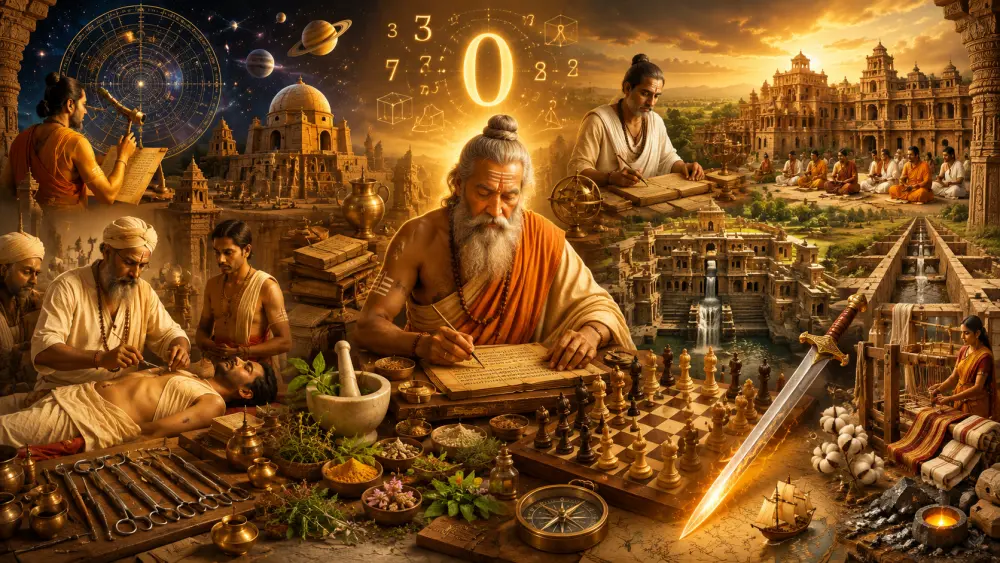
Ancient Indian Inventions That Changed the World
Long before the age of modern science, Ancient India was already home to remarkable breakthroughs in mathematics, medicine, engineering, and daily life. From the number zero to the foundations of surgery, many ancient Indian inventions quietly shaped the world we live in today. This article explores some of the most influential contributions from Ancient India and explains why their impact still matters in the modern era.
The Concept of Zero
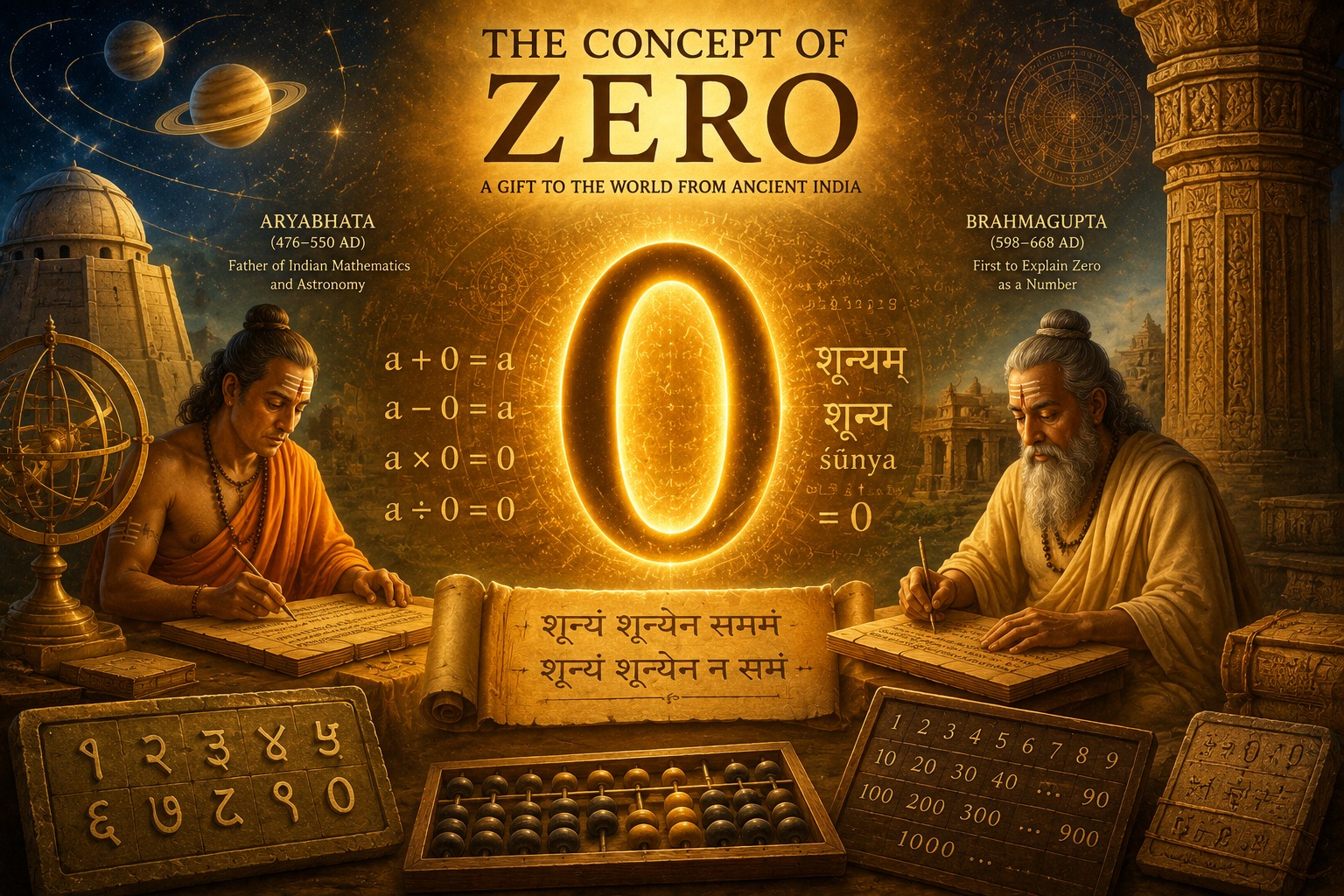
Perhaps no Indian invention has shaped the modern world as profoundly as the concept of zero. Ancient Indian mathematicians, most notably Aryabhata in the 5th century CE and Brahmagupta in the 7th century CE, developed and formalised zero as both a placeholder and a number in its own right, with defined mathematical rules. This idea eventually travelled through the Arab world to Europe, becoming the backbone of modern arithmetic. Without zero, the binary code that powers today's computers and digital technology simply couldn't exist.
The Decimal Number System
Alongside zero, Ancient India developed the decimal place-value system, where the position of a digit determines its value (units, tens, hundreds, and so on). This system made complex calculations far more efficient than earlier numeral systems and became the basis for modern mathematics, engineering, science, and global finance.
Ayurveda – The World's Oldest Medical System
Ayurveda, one of the world's oldest documented systems of medicine, takes a holistic approach to health, focusing on balance between body, mind, and lifestyle. The physician Charaka, credited as a foundational figure in Ayurvedic medicine, compiled the Charaka Samhita, a detailed text on diagnosis, treatment, and preventive care. Many principles from Ayurveda continue to influence modern wellness practices, herbal medicine, and integrative healthcare today.
Ancient Surgery: Sushruta, the Father of Surgery
Sushruta, an ancient physician, is widely regarded as the Father of Surgery. His text, the Sushruta Samhita, describes surgical procedures, including early forms of plastic surgery (notably nose reconstruction) and cataract surgery, along with detailed descriptions of surgical instruments. Many of his techniques and observations laid groundwork that modern surgical practice still recognises.
Chess: The Legacy of Chaturanga
The modern game of chess traces its roots to Chaturanga, a strategy game played in Ancient India that represented four divisions of an army — infantry, cavalry, elephantry, and chariotry. Chaturanga spread to Persia, where it evolved into "Shatranj," and eventually travelled through the Islamic world into Europe, gradually transforming into the chess played worldwide today.
Wootz Steel: A Metallurgical Marvel
Ancient India developed Wootz steel, a high-quality crucible steel known for its strength, sharpness, and distinctive patterns. Wootz steel was traded across the ancient world and is widely believed to be a key material behind the legendary Damascus steel, prized for centuries in weapon-making for its durability and edge retention.
Yoga: An Ancient Practice with Global Reach
Yoga originated in Ancient India as a practice combining physical postures, breathing techniques, and meditation to promote balance between body and mind. Rooted in ancient philosophical traditions, yoga has grown into a global wellness phenomenon, with millions practising it today for its documented benefits to flexibility, stress reduction, and overall mental well-being.
Water Management and Engineering
Ancient India showcased advanced engineering through:
-
Stepwells, which provided reliable access to groundwater in dry regions
-
Sophisticated drainage systems in Indus Valley Civilization cities like Mohenjo-daro and Harappa
-
Irrigation systems supporting large-scale agriculture
-
Rainwater harvesting techniques adapted to diverse climates
These systems reflect a deep, practical understanding of hydraulics and urban planning thousands of years ago.
Education System: Takshashila and Nalanda
Takshashila (Taxila) and Nalanda are often cited among the world's earliest centres of higher learning. Nalanda, in particular, attracted scholars from across Asia and taught subjects including philosophy, medicine, mathematics, logic, and astronomy. These institutions influenced educational traditions well beyond India's borders.
Lesser-Known Ancient Indian Inventions
-
Cotton cultivation — India was among the earliest regions to cultivate and weave cotton
-
Zinc extraction — Early distillation-based zinc smelting techniques were developed in ancient India
-
Astronomy — Detailed observations of celestial bodies, calendars, and planetary movements
-
Town planning — Grid-based city layouts seen in the Indus Valley Civilization
-
Navigation — Early advances in shipbuilding and maritime trade routes
Why These Inventions Still Matter
From the smartphone in your pocket (built on binary code rooted in zero) to modern surgical techniques and global wellness practices, Ancient Indian innovations continue to echo through science, medicine, education, and everyday life. They demonstrate how observation, experimentation, and documentation, even without modern tools, produced ideas robust enough to endure for millennia.
Conclusion
Ancient India's contributions to mathematics, medicine, engineering, and philosophy reveal a civilization deeply invested in understanding and improving the world around it. These inventions didn't just shape India's history — they became building blocks for global progress. Exploring this rich scientific and cultural heritage offers valuable insight into how ancient knowledge continues to inform modern innovation.


Be the first to comment on this post.